
Last updated September 10, 2026
Level 1 sweep and inspection to the NFPA 211 annual standard - flue, crown, cap, and flashing checked and photographed
Chimney sweep logs do not sweep chimneys. They loosen some creosote - which then falls where a brush and vacuum still have to collect it.
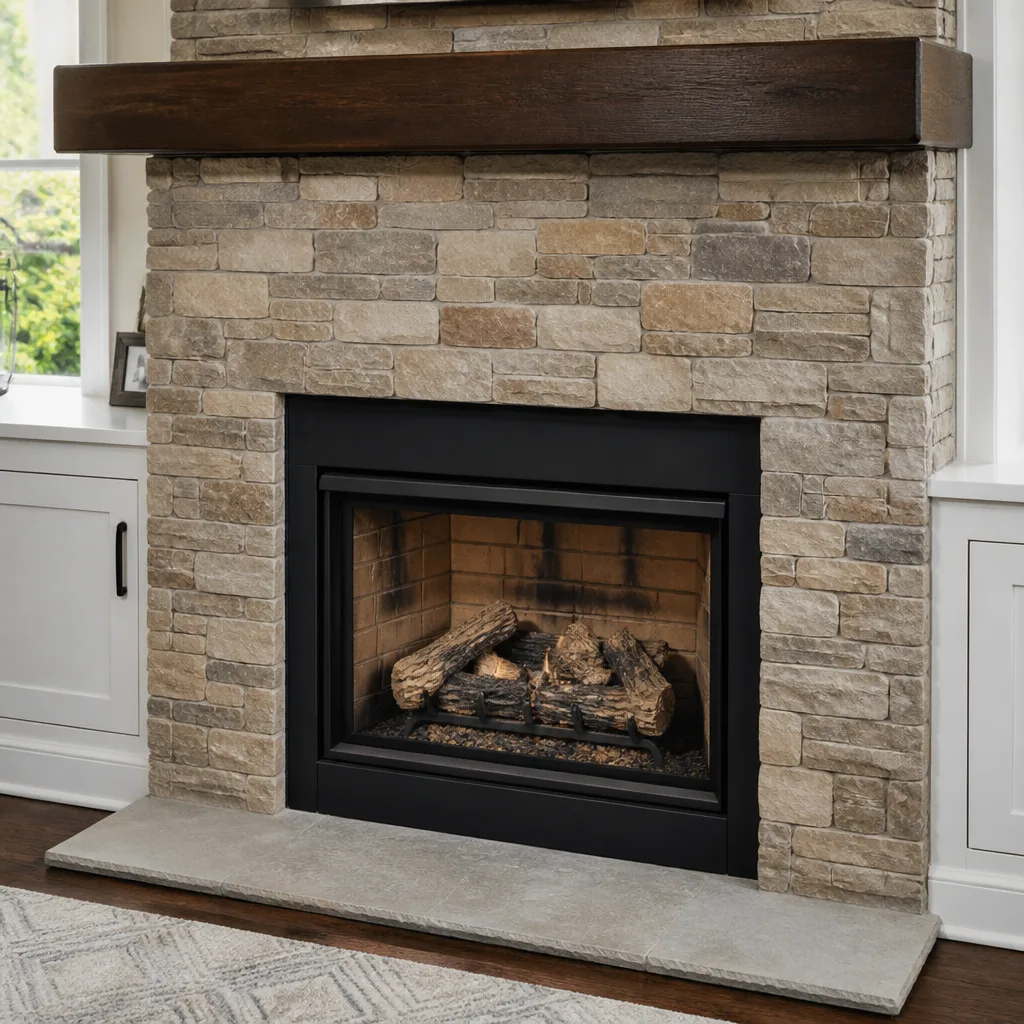
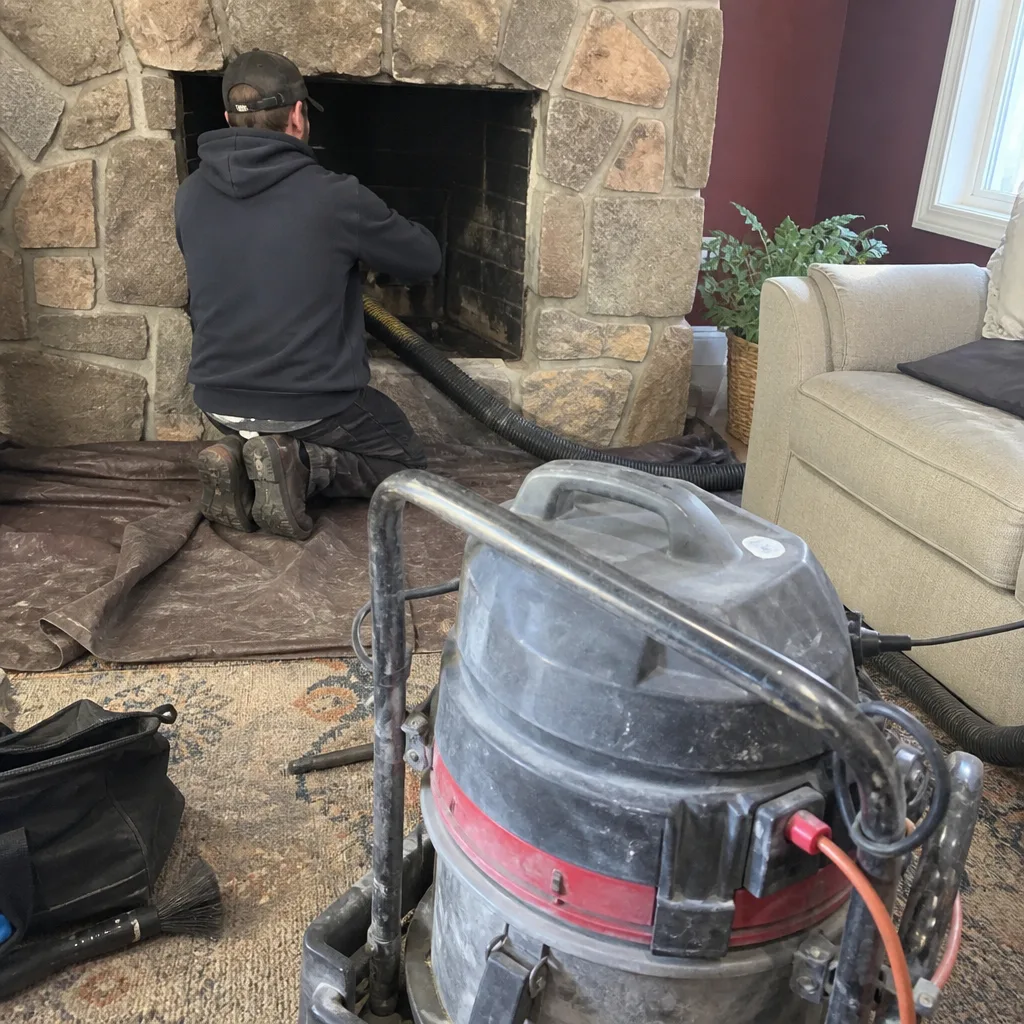 Before
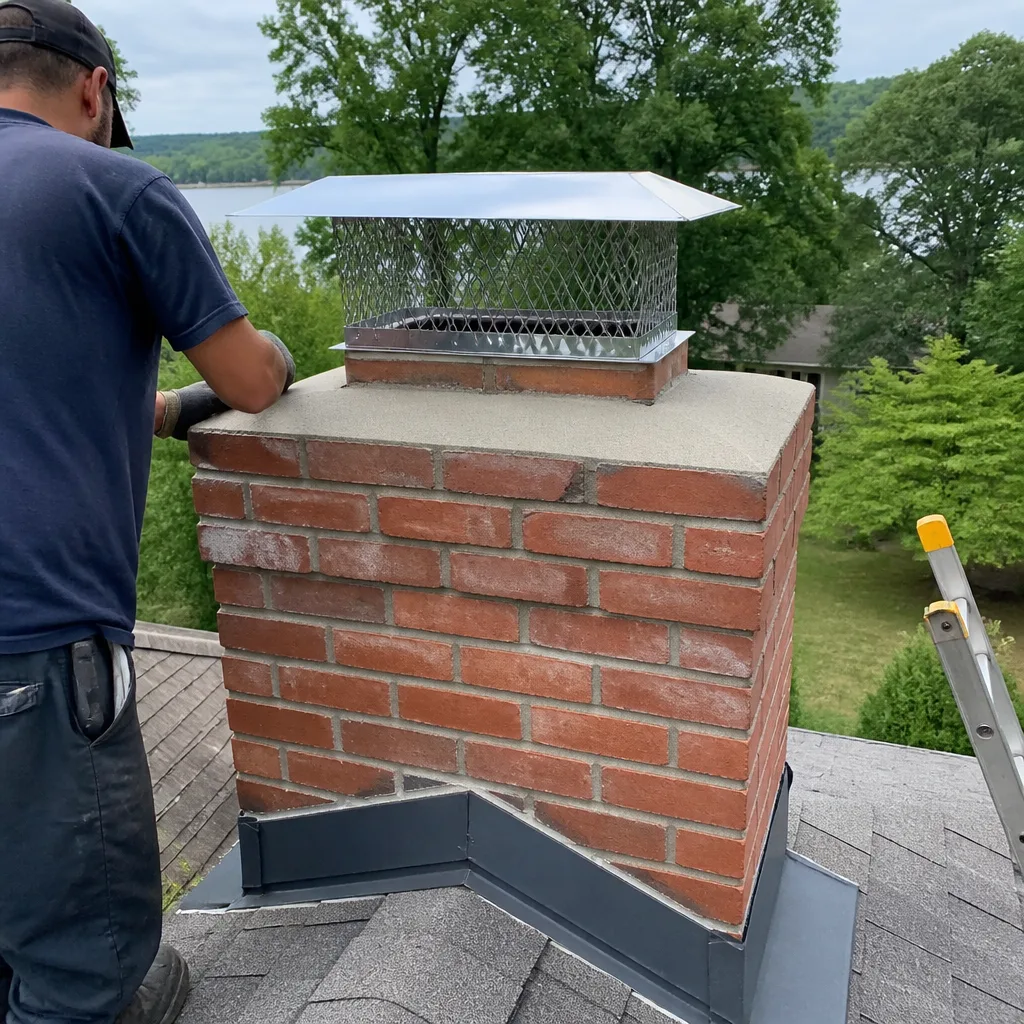 After
After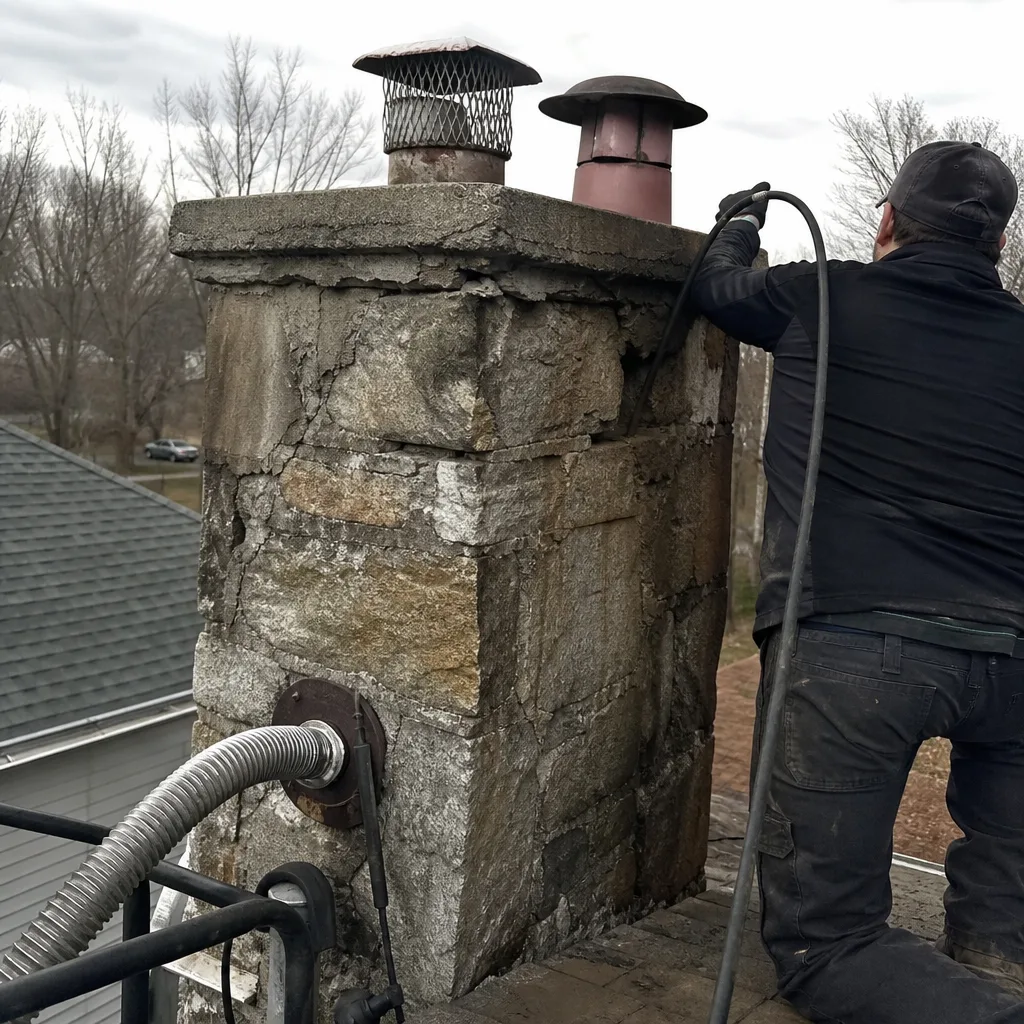 Before
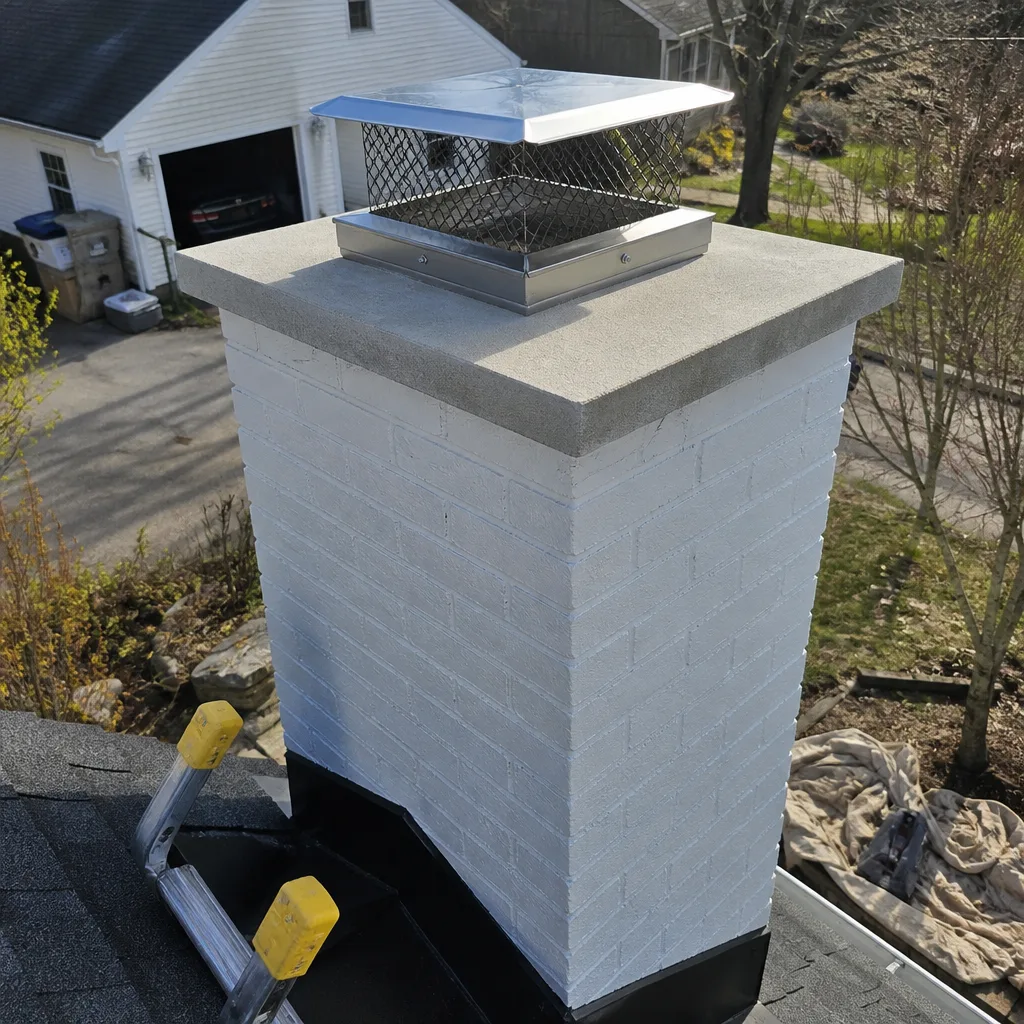 After
After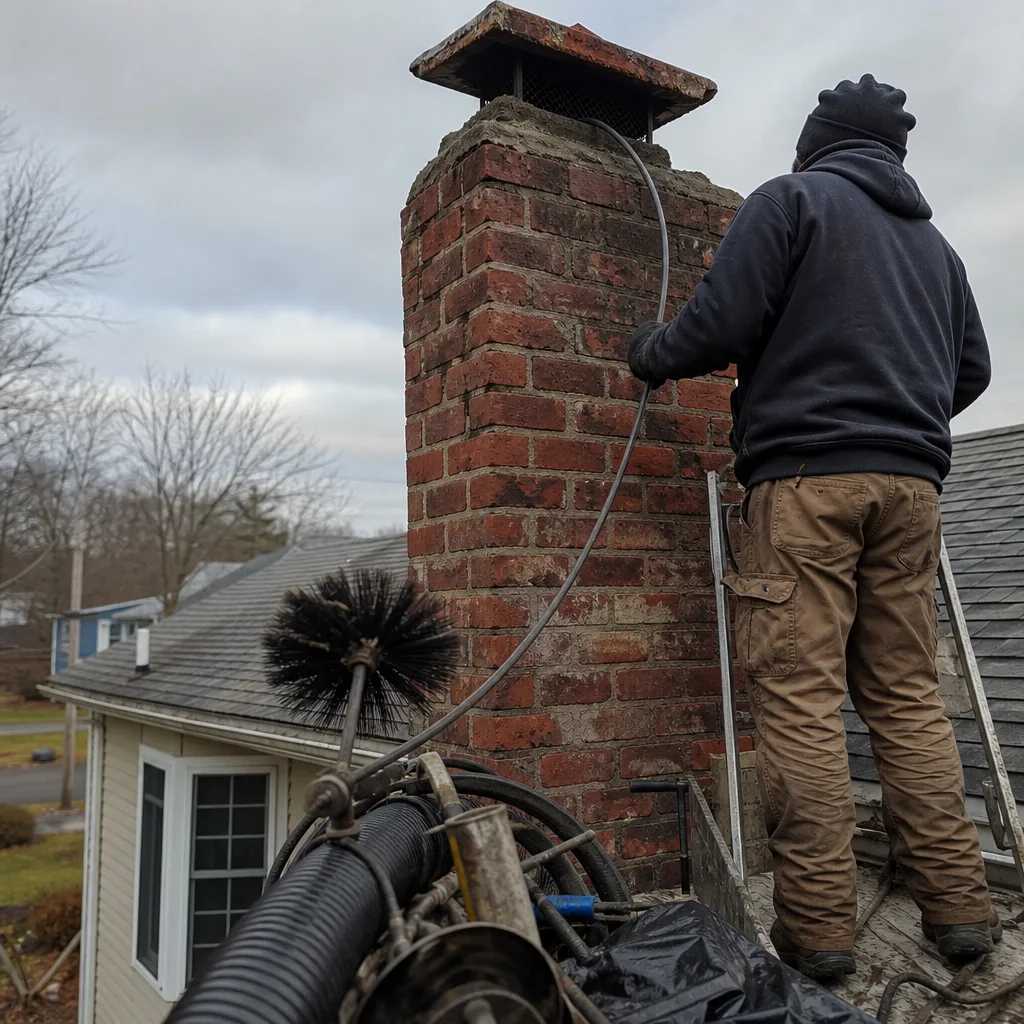 Before
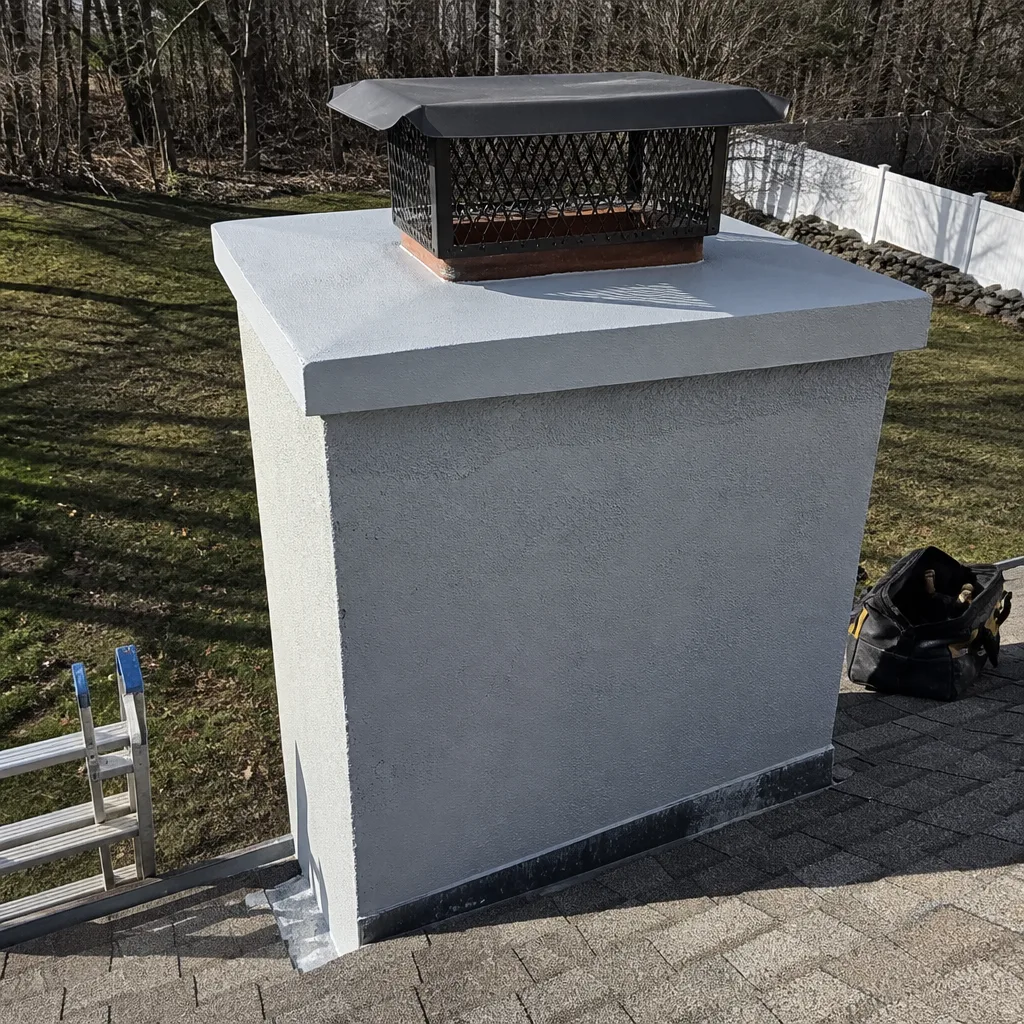 After
AfterThe Complete Guide to Chimney Cleaning in Shelton
The CSIA reports that 30% of home heating fires involve chimneys that had been “recently cleaned.” That statistic stops most homeowners cold, and it should. In our 42 years serving Fairfield County, we’ve inspected too many Shelton flues that looked clean to the naked eye but still harbored the conditions that start fires. The problem isn’t that cleaning fails. It’s that cleaning without a proper sequence fails. This guide maps every step of a complete chimney cleaning in Shelton - from the pre-sweep inspection through the documentation you should receive - so you can verify the job was done correctly, not merely completed. For more guides & resources, visit our blog.
Quick Answer
A complete chimney cleaning in Shelton takes 60 to 90 minutes for a standard fireplace flue and costs between $189 and $289 for most homes. The process includes a Level 1 inspection before any brushing begins, mechanical sweeping of the flue, smoke chamber and firebox cleaning, and written documentation with photos. Homes in Shelton’s older neighborhoods - particularly around Huntington Center and White Hills - often require additional attention due to clay tile offset joints and mortar degradation common in 1960s and 1970s construction.
Table of Contents
- Why the Sequence Matters More Than the Sweeping Itself
- Why Level 1 Inspection Must Come First - Not After
- How Shelton’s Housing Stock Changes What’s Required
- The Complete Cleaning Sequence, Step by Step
- Stage 1, 2, and 3 Creosote: What Your Sweep Should Tell You
- The Documentation You Should Receive After Every Cleaning
- How to Read Your Sweep Report and Know If the Job Is Finished
- What Chimney Cleaning Costs in Shelton
Why the Sequence Matters More Than the Sweeping Itself
Most homeowners picture chimney cleaning as a single action: a brush, a flue, some soot coming down. That image is why so many “clean” chimneys still fail.
A proper cleaning is a sequence of interdependent steps. Skip one, and the others lose their value. Run a brush through a flue without first inspecting for cracked tiles, and you may lodge debris behind a break that blocks draft. Document nothing, and you have no baseline for next year’s comparison. The homeowner sees a clean fireplace and assumes safety. The sweep knows better.
We’ve been called to homes in Shelton’s Booth Hill area where a previous company brushed the flue, collected their fee, and left a deteriorated smoke chamber untouched. The flue was “clean.” The system was still hazardous. The sequence matters because each step verifies the next one was possible and necessary.
The full sequence looks like this:
- Exterior visual assessment of the chimney structure, crown, and cap
- Interior Level 1 inspection of accessible flue surfaces
- Pre-cleaning documentation with photos of creosote deposits and any damage
- Mechanical sweeping with brushes matched to flue diameter and liner material
- Smoke chamber and firebox cleaning
- Post-cleaning inspection to verify complete removal and identify any newly exposed conditions
- Written report with photos, creosote stage notation, and plain-English verdict
A sweep that skips to step four is not providing the service you’re paying for. They’re performing a partial job that leaves you with partial safety.
Why Level 1 Inspection Must Come First - Not After
The National Fire Protection Association Standard 211 requires a Level 1 inspection before cleaning when the chimney’s condition is unknown or has changed since last service. Many competitors treat this as a post-cleaning formality. We treat it as the foundation of everything that follows.
The Level 1 inspection in a Shelton home should examine:
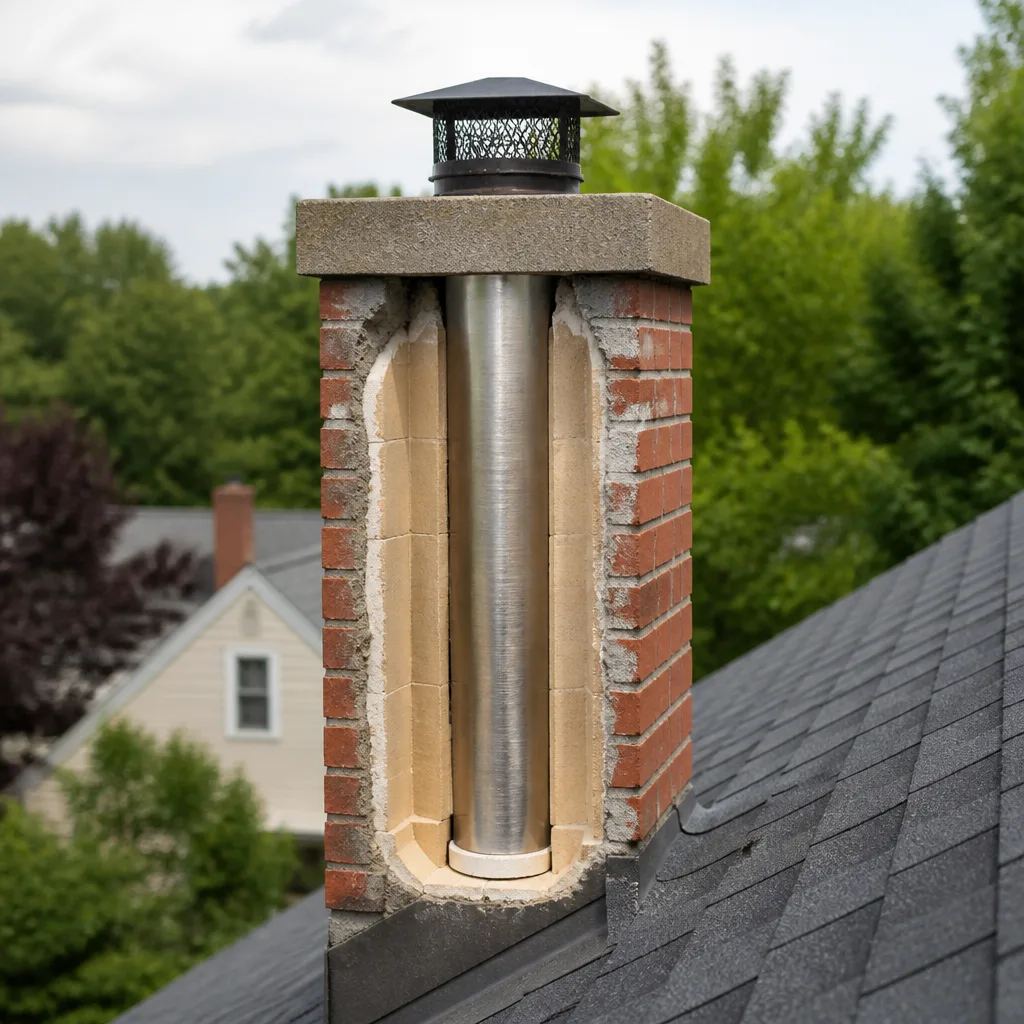
- Accessible portions of the flue liner for cracks, gaps, or missing mortar joints
- Smoke chamber for proper parging and structural integrity
- Firebox for cracked or missing refractory panels
- Damper operation and seal condition
- Exterior chimney structure for leaning, spalling, or crown deterioration
Here’s why order matters. In a 1970s raised ranch off Route 110 we serviced last season, the Level 1 inspection revealed a displaced clay tile joint three feet above the smoke shelf. Running brushes through that flue without knowing the condition would have packed soot behind the offset, potentially blocking the flue entirely. We documented the condition, cleaned around it with modified technique, and presented the homeowner with camera evidence of the repair needed.
Without the pre-cleaning inspection, that displaced joint would have been invisible until a draft problem appeared - or worse, until smoke began backing up into the living space.
The inspection also determines what equipment the sweep brings to the job. Stage 3 glazed creosote requires rotary chains or chemical treatment, not standard poly brushes. A stainless steel liner from DuraFlex needs different tooling than an unlined masonry flue. You cannot select the right approach without looking first.
At Hearthstone Chimney Co., our Level 1 inspection includes photos you can see and a plain-English verdict before any cleaning begins. No surprises, no hidden conditions discovered after the work starts.
How Shelton’s Housing Stock Changes What’s Required
Shelton’s development patterns create distinct chimney profiles that affect cleaning difficulty, duration, and sometimes cost. Understanding your home’s category helps you set appropriate expectations and recognize when a sweep is - or isn’t - accounting for local conditions. Our Seasonal Chimney Cleaning Care for Shelton: Year-Round Homeowner’s Guide explains how timing affects these profiles.
Colonial and Cape Cod Homes (Pre-1970, Huntington Center, White Hills, Booth Hill)
These homes typically feature masonry fireplaces with clay tile liners, often 8″ x 8″ or 8″ x 12″ flue dimensions. The age of these systems presents specific challenges:
- Clay tile offsets at joints, where decades of thermal cycling have shifted individual tiles
- Mortar joint erosion between tiles, creating gaps that collect creosote in inaccessible pockets
- Thinner flue walls due to acid degradation from decades of combustion byproducts
- Smoke chambers that were never parged (smoothed with refractory mortar), creating turbulence that accelerates creosote buildup
In our experience, homes in the Huntington Center area built during the 1950s and 1960s show mortar joint erosion in roughly 40% of inspections. This doesn’t always require immediate repair, but it changes how we clean - using lower brush speed, modified head design, and more frequent camera verification to avoid dislodging already-loose material into hidden gaps.
Raised Ranches and Split Levels (1970s-1980s, River Road corridor, Bridgeport Avenue area)
These homes often feature factory-built metal fireplaces with proprietary chimney systems. Cleaning requirements differ significantly:
- Smaller flue diameters (typically 6″ or 8″ round) that require correctly sized brushes
- Factory specifications that prohibit certain cleaning methods or chemicals
- Chase covers (the metal top of the chimney enclosure) that deteriorate and leak, causing hidden water damage to the firebox surround
We’ve replaced dozens of chase covers in the River Road area where water intrusion had rusted the firebox or damaged surrounding framing - conditions discovered during routine cleaning that the homeowner had no way to detect from inside the house.
Newer Construction (1990s-Present, Pine Rock Park, residential developments off Constitution Boulevard)
These homes may feature direct-vent gas fireplaces with no traditional flue, or they may have modern masonry with stainless steel liners. The cleaning protocol differs again:
- Direct-vent systems require inspection of the vent termination, glass assembly, and combustion air intake - not flue brushing
- Stainless liners from brands like Olympia Chimney or DuraFlex clean more readily than clay but require non-abrasive brushes to preserve the metal surface
Shelton’s variable climate - humid summers, freeze-thaw winters, and the occasional coastal storm pushing inland from Long Island Sound - accelerates exterior chimney deterioration regardless of age. The crown, the cap, and the flashing deserve attention during every cleaning visit, not as an upsell but as part of a complete assessment.
The Complete Cleaning Sequence, Step by Step
This is the sequence we follow on every chimney cleaning in Shelton. Use it to evaluate any sweep you hire, including us.
Step 1: Exterior Assessment (5-10 minutes)
Before entering the house, we examine the chimney from the ground and roof (when safely accessible). We’re looking for:
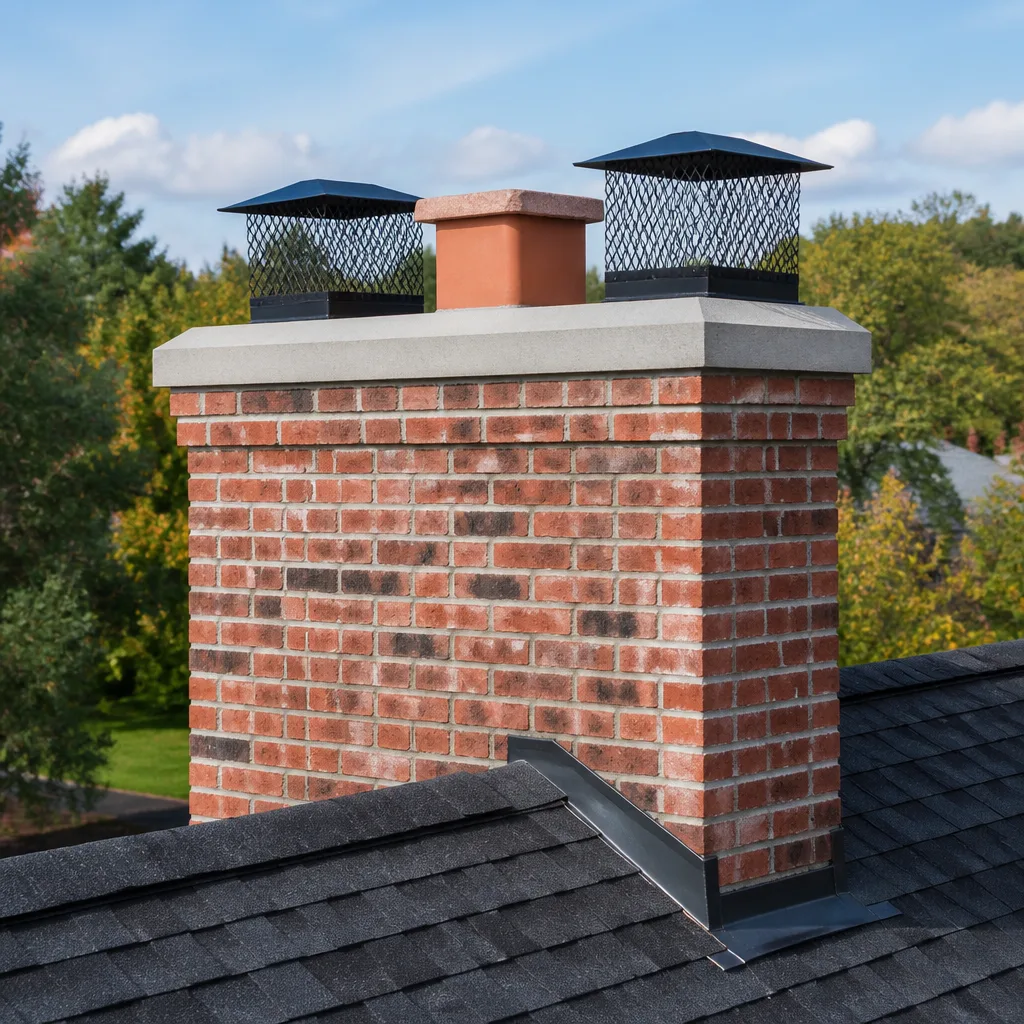
- Crown cracks or deterioration that allow water into the flue
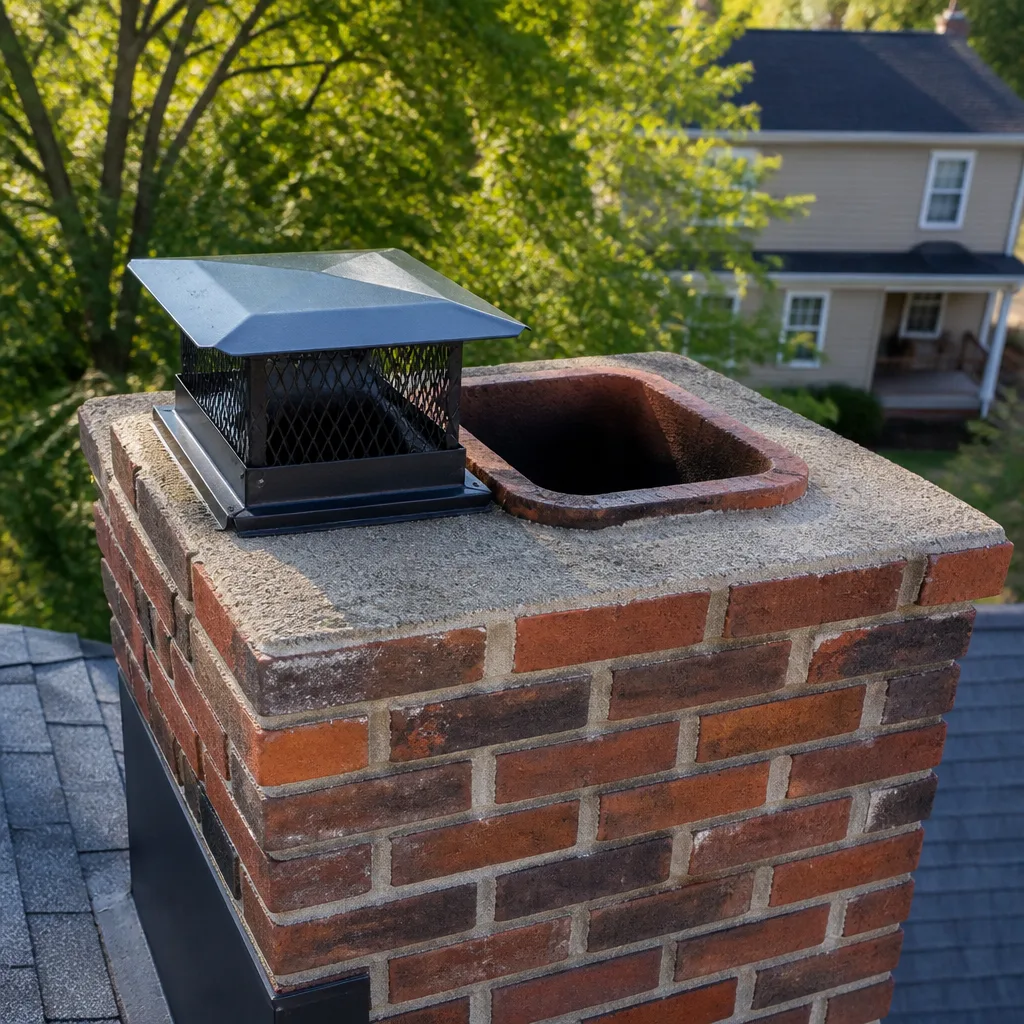
- Cap condition - present, properly sized, and securely attached
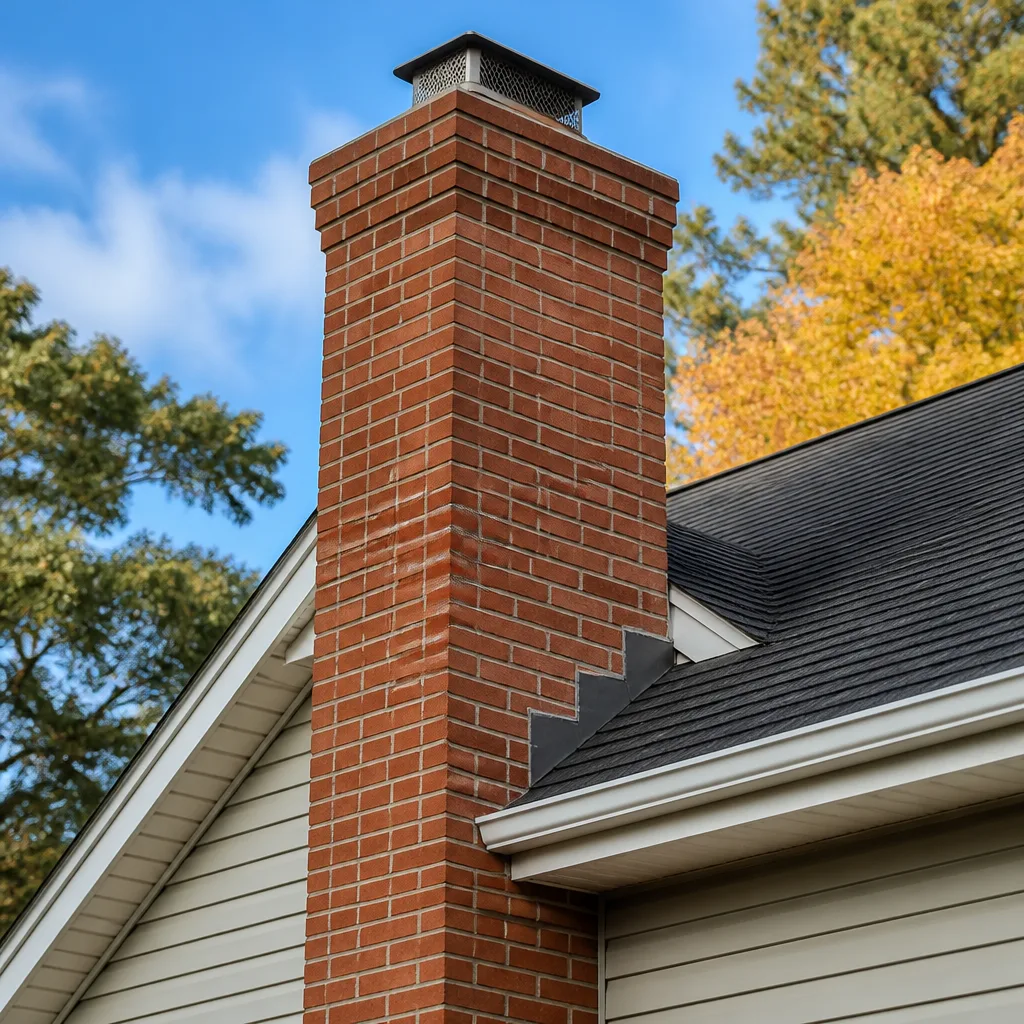
- Flashing integrity at the roofline
- Brick or stone spalling, indicating moisture damage
- Overall plumb - a leaning chimney indicates foundation or structural issues
In Shelton, where many homes sit on sloped lots with limited access, this exterior check sometimes reveals conditions the homeowner hasn’t noticed from inside. A missing cap discovered in October means leaves and animal nesting material may already be in the flue.
Step 2: Interior Level 1 Inspection (15-20 minutes)
We lay protective coverings, examine the firebox and smoke chamber with high-output lighting, and run a visual scan of the flue from below. For masonry chimneys, we note:
- Creosote color, texture, and estimated stage
- Tile condition - cracks, spalling, shifted joints
- Smoke chamber shape and surface condition
- Damper operation and seal quality
We photograph everything. These photos become part of your permanent record and our baseline for comparison at next year’s service.
Step 3: Equipment Selection and Setup (5-10 minutes)
Based on inspection findings, we select:
- Brush diameter and material (poly, wire, or rotary chain)
- Rod type and length
- Vacuum capacity and HEPA filtration
- Drop cloths and containment for the work area
For homes with Famco or Copperfield components, we verify compatibility with our cleaning approach. Some specialty caps require removal before proper brushing can occur.
Step 4: Mechanical Sweeping (20-40 minutes)
The flue is brushed from top to bottom or bottom to top depending on access and configuration. Key points:
- Brushes must contact all flue surfaces - undersized brushes leave deposits
- Speed and pressure vary by creosote stage and liner material
- Multiple passes with inspection between ensure complete removal
- A high-capacity vacuum runs continuously to contain debris
In Shelton’s older homes with offset clay tiles, we often use flexible rods with guided brush heads to navigate joint irregularities without lodging debris.
Step 5: Smoke Chamber and Firebox Cleaning (10-15 minutes)
This step separates thorough sweeps from superficial ones. The smoke chamber - the area above the damper and below the flue - accumulates significant creosote but is inaccessible to standard flue brushes. We use hand tools, specialized scrapers, and vacuum extraction to remove deposits from this critical area.
The firebox receives detailed cleaning of ash residue, soot staining, and debris. Refractory panels are inspected for cracks that would require replacement before safe use.
Step 6: Post-Cleaning Verification (10-15 minutes)
After cleaning, we re-inspect:
- Flue surfaces for complete creosote removal
- Any previously noted damage for changes or progression
- Newly exposed conditions that were hidden by deposits
This second look frequently reveals conditions the pre-cleaning inspection could not assess - cracked tiles masked by thick creosote, for example.
Step 7: Documentation and Verdict (10 minutes)
We compile photos, notes, and recommendations into a written report with a plain-English verdict: the chimney is safe for use, safe with noted conditions, or not safe until specific repairs are completed. Nothing is recommended without photo evidence you can see for yourself.
Stage 1, 2, and 3 Creosote: What Your Sweep Should Tell You
Not all “dirty” chimneys are equally hazardous, and not all cleaning jobs are equally effective. The Chimney Safety Institute of America defines three stages of creosote accumulation. Your sweep should identify which stage is present, because that determines both cleaning method and urgency.
Stage 1: Sooty or Powdery Deposits
Stage 1 creosote looks like black or brown soot, brushes off readily, and indicates relatively efficient combustion with appropriate fuel. Standard mechanical sweeping removes it completely. This is what most homeowners picture when they think of chimney cleaning.
In Shelton, we see Stage 1 primarily in:
- Well-maintained systems burning properly seasoned hardwood
- Occasional-use fireplaces (weekend evenings, not daily heating)
- Newer appliances with controlled combustion air
Stage 2: Crunchy or Flaky Deposits
Stage 2 creosote has begun to harden into layered, tar-like flakes. It requires more aggressive mechanical removal - stiffer brushes, possibly rotary chains, and longer cleaning time. The flakes are combustible and can ignite at lower temperatures than Stage 1 material.
This stage often appears in Shelton homes where:
- Softwood or insufficiently seasoned wood has been burned
- The fireplace is used as supplementary heat during cold snaps
- Appliance settings restrict airflow, creating cooler flue temperatures
Stage 3: Glazed or Hardened Deposits
Stage 3 creosote is a glossy, hardened, highly combustible coating that bonds to flue surfaces. It cannot be removed by standard brushing. Removal requires:
- Chemical treatment to soften deposits over days or weeks, followed by mechanical removal
- Or rotary chain systems that physically abrade the glazed surface
- Or, in severe cases, liner replacement if the underlying flue is damaged
Stage 3 is a genuine fire hazard. Its ignition temperature is significantly lower than Stage 1 or 2 material, and it burns with intense heat that can crack clay tiles or damage metal liners.
We’ve encountered Stage 3 creosote in Shelton homes where the homeowner believed annual “cleaning” had been performed - but the previous service had only brushed loose soot from accessible surfaces, leaving hardened deposits in place. The flue looked clean. It wasn’t.
Your sweep should document the stage found, the stage removed, and any stage that could not be fully addressed. If you don’t see this notation in your report, you don’t have a complete record.
The Documentation You Should Receive After Every Cleaning
A cleaning without documentation is a cleaning you cannot verify. After 42 years in this trade, we’ve learned that the written record protects both the homeowner and the company that did the work. Here’s what every Shelton homeowner should receive:
1. Dated Service Report with Company Identification
The report should identify the service company, technician, date, and address serviced. This seems obvious, but we’ve encountered “cleaning” jobs where the homeowner couldn’t identify who performed the work when problems arose later.
2. Pre-Cleaning Photographs
Photos of the flue interior, smoke chamber, firebox, and any visible damage before work begins. These establish baseline conditions and protect against disputes about pre-existing damage.
3. Creosote Stage Notation
Clear identification of the creosote stage(s) present, with location (flue, smoke chamber, firebox). Multiple stages may exist in different areas of the same system.
4. Cleaning Method Description
What equipment was used, what areas were accessed, and what techniques were employed. This matters for warranty purposes and for comparison with future services.
5. Post-Cleaning Photographs
Photos of the same areas after cleaning, demonstrating complete removal. These should be comparable in angle and lighting to the pre-cleaning shots.
6. Plain-English Verdict
A clear statement: the chimney is safe for normal use; safe for use with noted conditions requiring monitoring; or not safe for use until specified repairs are completed. Vague language like “service performed” without a safety determination is inadequate.
7. Repair Recommendations with Prioritization
If repairs are needed, they should be listed with:
- Specific description of the condition (not generic “flue repair”)
- Photo evidence of the problem
- Safety impact if unaddressed
- Timeline recommendation (immediate, before next burning season, monitor annually)
At Hearthstone, our 90-Day Done Right Promise applies to every cleaning: if it’s not done right, we make it right, backed in writing with no paperwork and no arguing. The documentation makes that promise enforceable.
How to Read Your Sweep Report and Know If the Job Is Finished
Receiving documentation is one thing. Understanding whether it indicates complete service or ongoing need is another. Here’s how to read your report with the skepticism of someone who has been burned by contractors before.
Red Flag: No Pre-Cleaning Photos
If the report shows only post-cleaning images, you have no proof of starting conditions. A sweep could have performed minimal work on a heavily coated flue and you’d have no basis for comparison.
Red Flag: No Creosote Stage Mentioned
The absence of stage notation suggests the sweep didn’t assess what they were removing. Stage 1 and Stage 3 require different approaches and carry different safety implications. Generic “cleaned” language avoids this distinction.
Red Flag: Vague Verdict Language
“Chimney serviced” or “cleaning completed” is not a safety determination. You need a clear statement about whether the system is safe for use. Conditional language (“appears serviceable”) may indicate the sweep is unwilling to stand behind their assessment.
Green Flag: Specific Damage Descriptions
“3/8-inch vertical crack in rear firebox refractory panel, 4 inches from left edge, photo 7” is specific and verifiable. “Firebox has some wear” is not.
Green Flag: Prioritized Recommendations with Timelines
A report that distinguishes “repair before next use” from “monitor at next annual inspection” shows professional judgment and respects your ability to plan. Everything marked “urgent” suggests either genuine widespread problems or pressure tactics.
Green Flag: Comparison to Previous Service
If you’ve used the same company before, the report should reference prior findings. “Clay tile offset joint at 8 feet, unchanged since 2022 inspection” tells you a condition is stable. New notations without this context leave you guessing about progression.
In Shelton, where many homeowners have lived in their homes for decades, this longitudinal record becomes increasingly valuable. We’ve serviced homes in the White Hills area where our records extend back 25 years, documenting conditions from installation through current state. That history informs better decisions than any single inspection could.
What Chimney Cleaning Costs in Shelton
Price transparency matters, especially for homeowners who remember when service quotes were reliable. Here’s what chimney cleaning costs in the Shelton market, with the variables that affect your specific price.
| Service | Typical Range | What Affects Price |
|---|---|---|
| Standard fireplace flue cleaning (Level 1 included) | $189 - $289 | Flue height, accessibility, creosote stage, liner type |
| Wood stove or insert cleaning | $229 - $329 | Stove removal/reinstallation, baffle complexity, connector pipe length |
| Fireplace with gas log set (cleaning + inspection) | $169 - $249 | Log set removal, burner condition assessment |
| Stage 3 creosote removal (chemical treatment + mechanical) | $389 - $649 | Extent of glazing, flue diameter, number of treatments required |
| Chase cover replacement (factory-built chimney) | $425 - $895 | Size, material (galvanized vs. stainless vs. copper), access difficulty |
| Cap installation (if missing or inadequate) | $195 - $425 | Flue size, material, spark arrestor requirement |
Shelton-specific factors that may place you in the upper or lower end of these ranges:
- Steep roof pitch common in Colonial and Cape Cod designs increases access difficulty
- Tall chimneys on homes built into hillside lots require additional rod sections and time
- Multiple flues (fireplace plus furnace or water heater) require separate cleaning protocols
- Off-season scheduling (March through August) sometimes allows more flexible pricing than peak fall demand
Our no-hassle upfront pricing means the number on your estimate is the number on your invoice. We don’t discover “additional conditions” after work begins that inflate the final bill. If our pre-cleaning inspection reveals needs beyond the quoted scope, we discuss them with you before proceeding, with photo evidence you can see.
Standing offers that apply to chimney repair in Shelton and related services:
- $50 off any repair over $250
- Free second opinion on any written estimate
- $89 seasonal tune-up (limited availability, typically spring and summer)
- Permanent 5% senior and veteran discount
Common Mistakes to Avoid
- Hiring based on lowest price alone. In Shelton’s competitive market, prices below $150 for a standard cleaning often indicate skipped inspection steps, uninsured operators, or bait-and-switch tactics. The cost of a missed cracked tile exceeds any upfront savings.
- Scheduling cleaning after the first fire of the season. By October, reputable sweeps in Fairfield County are booked weeks out. Schedule in spring or summer for fall readiness, and for potential off-season savings.
- Accepting verbal reports without photos. A sweep who won’t document conditions photographically may be concealing incomplete work or avoiding accountability for damage. Insist on visual evidence.
- Ignoring the smoke chamber. Many “cleanings” address only the flue, leaving the smoke chamber - a major creosote collection area - untouched. Ask specifically whether this area was accessed and cleaned.
- Assuming a new home needs no inspection. Even new construction in Shelton’s Pine Rock Park area can have installation errors, missing caps, or debris from construction. A Level 1 inspection before first use is prudent.
- Using the chimney as a de facto trash chute. We’ve found everything from bird nests to roofing debris in Shelton flues. The cap is your first defense; if it’s missing or damaged, schedule service before lighting any fire.
- Skipping annual service because “we barely use it.” Even occasional use produces creosote. More critically, annual inspection catches deterioration from weather, moisture, and age - problems that develop regardless of fire frequency.
When to Call a Professional
Some conditions require immediate professional assessment, not scheduled maintenance. Call a sweep promptly if you notice:
- Smoke entering the room during fireplace use
- Strong, unusual odors from the fireplace when not in use
- Visible cracks in the firebox or exterior chimney structure
- White staining (efflorescence) on exterior brick, indicating moisture intrusion
- Debris or animal activity in the flue
- Any chimney fire, however brief - even a “small” event can cause hidden damage
Carbon monoxide presents a particular danger with compromised chimney systems. If your CO detector alarms and you suspect a chimney or venting problem, evacuate and call emergency services, then schedule professional inspection before resuming use.
Hearthstone Chimney Co. offers free estimates in Shelton - call (475) 265-6822. A live person answers every call, 24 hours a day, every day. We’ll schedule a convenient time, perform a complete Level 1 inspection with photos you can see, and give you a plain-English verdict with no pressure and no obligation.
Frequently Asked Questions
A standard chimney cleaning with Level 1 inspection in Shelton typically costs between $189 and $289 for a single fireplace flue. Wood stoves, inserts, and systems with Stage 2 or 3 creosote fall toward the higher end. We provide no-hassle upfront pricing - the estimate number matches the invoice number. Call (475) 265-6822 for an exact quote; estimates are free.
The National Fire Protection Association recommends annual inspection, with cleaning as needed based on creosote accumulation. Most Shelton homeowners who use their fireplace regularly need annual cleaning. Occasional users may extend to every two years if inspection shows minimal buildup, but the annual inspection itself should not be skipped. Call (475) 265-6822 to schedule your inspection.
Not always. A clay tile liner in good condition with intact mortar joints typically needs no replacement. We recommend liner installation or repair only when camera inspection reveals cracks, gaps, or deterioration that compromise safety - and we show you the photo evidence before recommending anything. In Shelton’s older homes with unlined masonry flues or degraded clay tiles, a stainless steel liner from DuraFlex or Olympia Chimney may be the correct solution, but only when conditions warrant it. Call (475) 265-6822 for a camera inspection and second opinion.
Skipped cleaning allows creosote to accumulate, increasing fire risk and potentially blocking the flue. In Shelton’s climate, moisture intrusion combined with acidic combustion byproducts accelerates liner and masonry deterioration even when the fireplace isn’t in use. The cost of deferred maintenance typically exceeds the cost of regular service, and some damage - like a chimney fire or carbon monoxide incident - cannot be undone. Call (475) 265-6822 to get back on schedule.
A complete cleaning with Level 1 inspection takes 60 to 90 minutes for a standard fireplace in most Shelton homes. Older homes with offset clay tiles, multiple flues, or Stage 3 creosote may require 2 to 3 hours. We schedule adequate time and don’t rush the inspection or documentation steps. Call (475) 265-6822 to book a convenient appointment.
A sweep is the physical removal of creosote and debris. An inspection is the visual assessment of system condition. They are separate services that should be performed together - inspection first, to determine what cleaning approach is safe and appropriate. In our 42 years of service, we’ve seen too many “sweeps” that skipped inspection and caused damage, or “inspections” that never resulted in proper cleaning. The complete job includes both, in the correct sequence. Call (475) 265-6822 for the full service.
The Bottom Line
Chimney cleaning in Shelton is not a single task but a sequence - exterior assessment, Level 1 inspection, equipment selection, mechanical sweeping, smoke chamber and firebox cleaning, post-cleaning verification, and written documentation with photos. Skip any step, and the homeowner receives partial safety with full confidence. The CSIA statistic about recently cleaned chimneys catching fire exists because too many services complete the brushing without completing the process.
Verify your sweep’s sequence. Demand photo documentation. Insist on a plain-English verdict, not vague completion language. And schedule service before the fall rush, when Shelton’s best sweeps are booked and the temptation to hire quickly overrides the discipline to hire well.
Done right - and we stand behind it. That’s the standard we’ve held for over 42 years.
Written by Russell Haines, Owner at Hearthstone Chimney Co., serving Shelton since 2014.