
Last updated September 10, 2026
Level 1 sweep and inspection to the NFPA 211 annual standard - flue, crown, cap, and flashing checked and photographed
Chimney sweep logs do not sweep chimneys. They loosen some creosote - which then falls where a brush and vacuum still have to collect it.
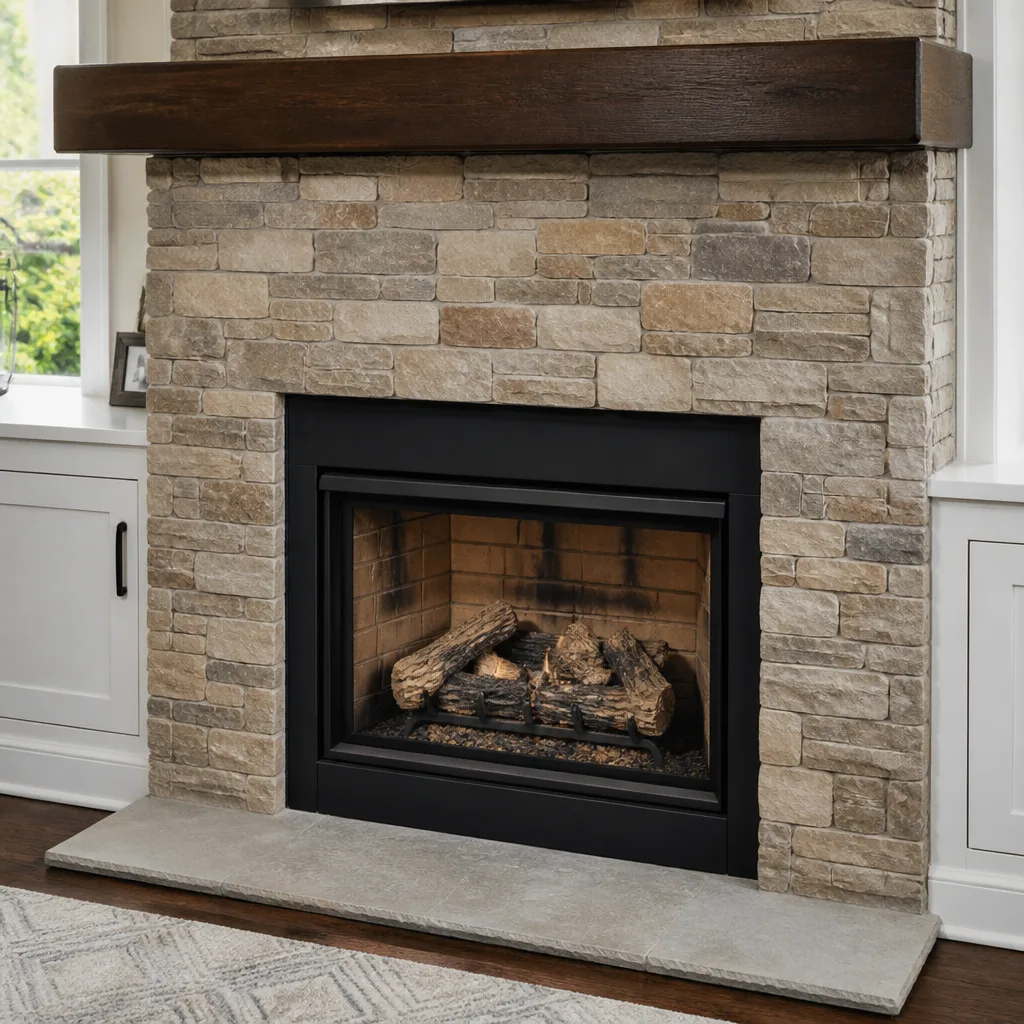
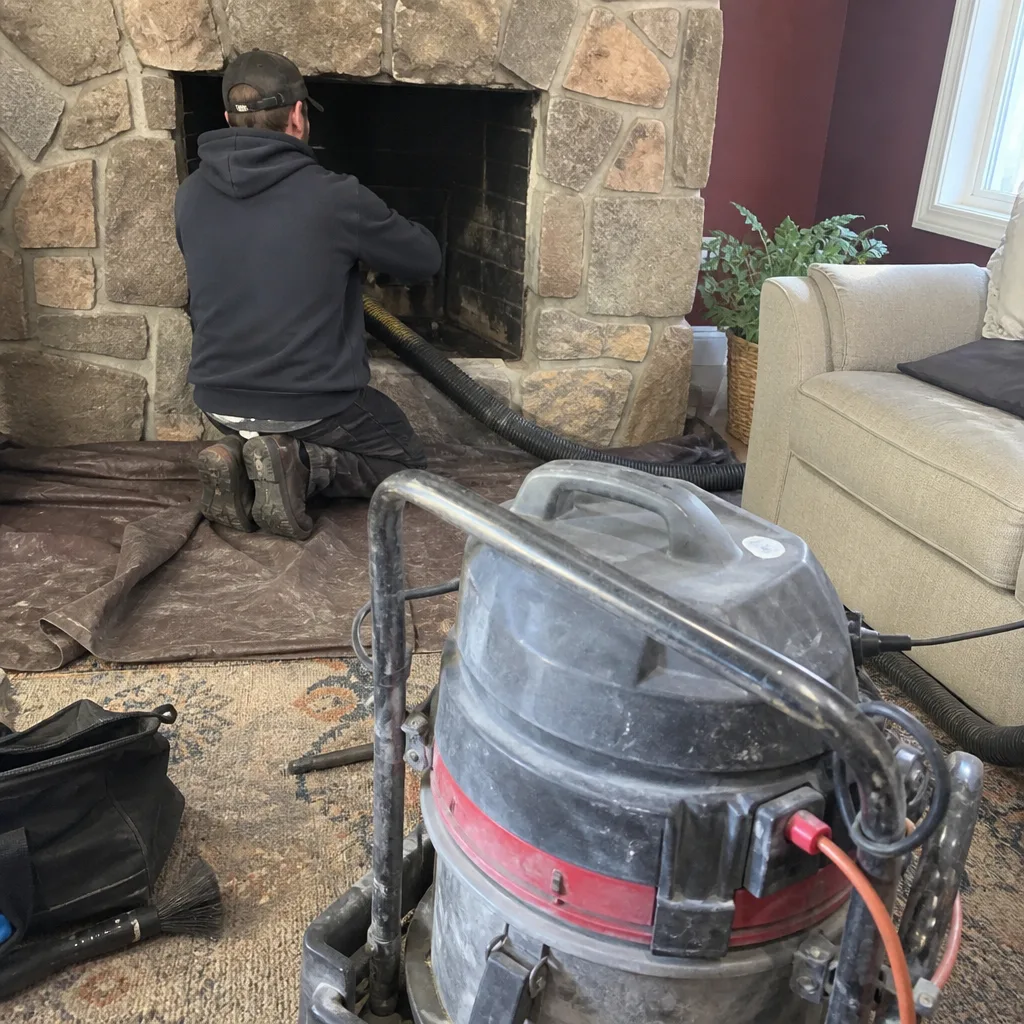 Before
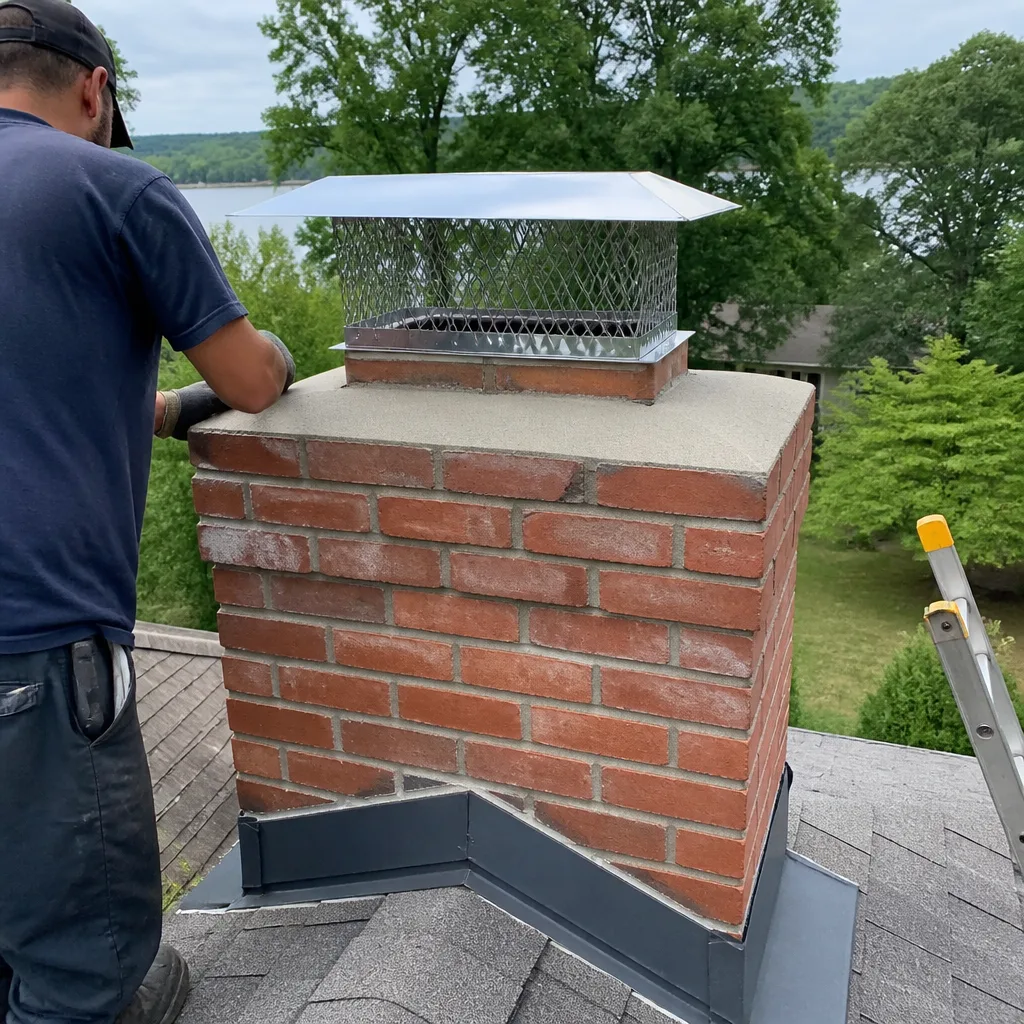 After
After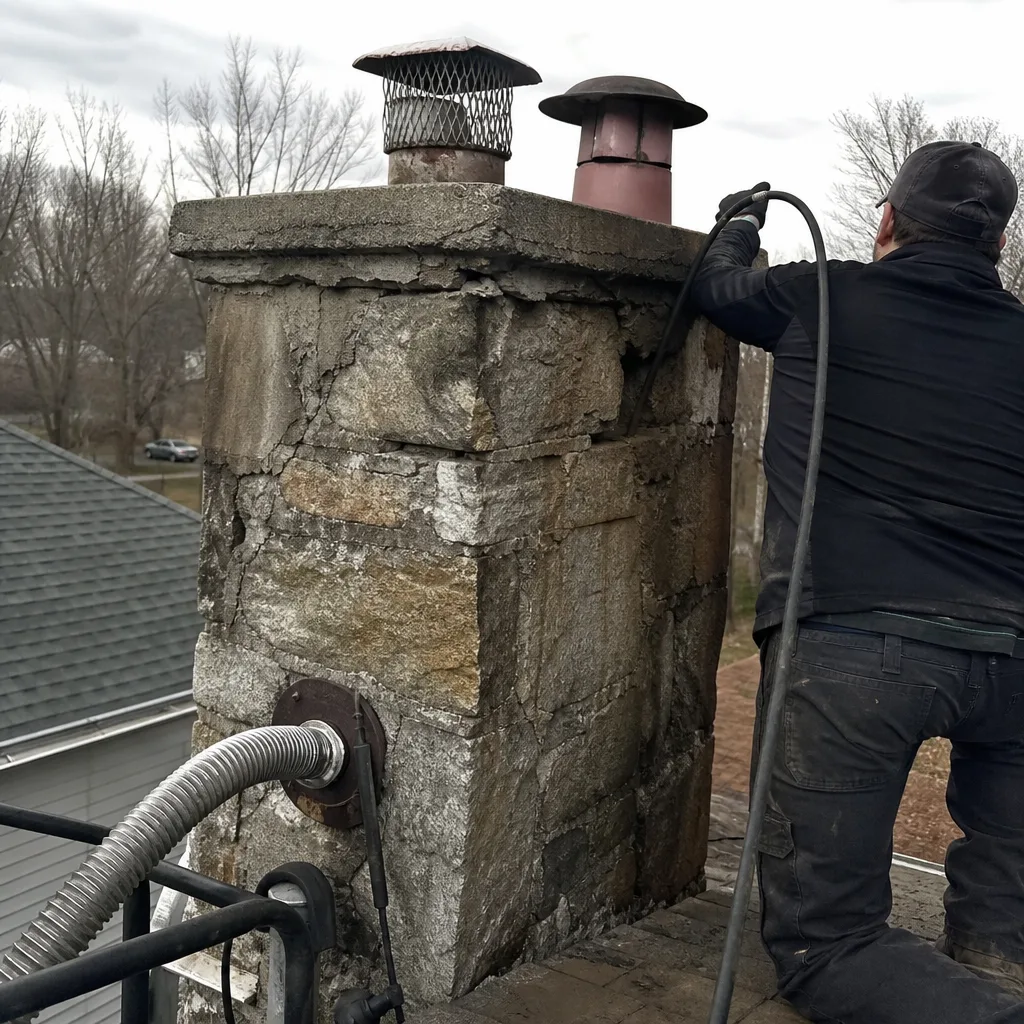 Before
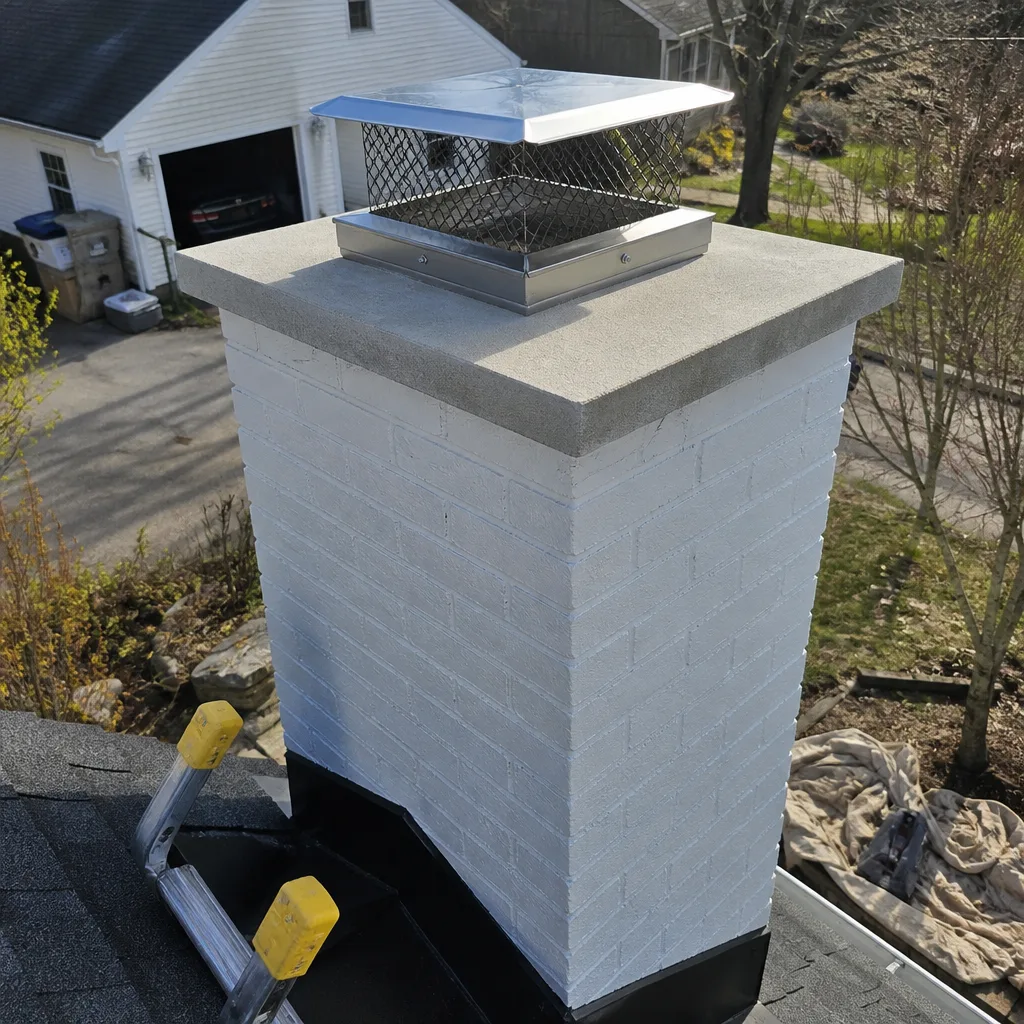 After
After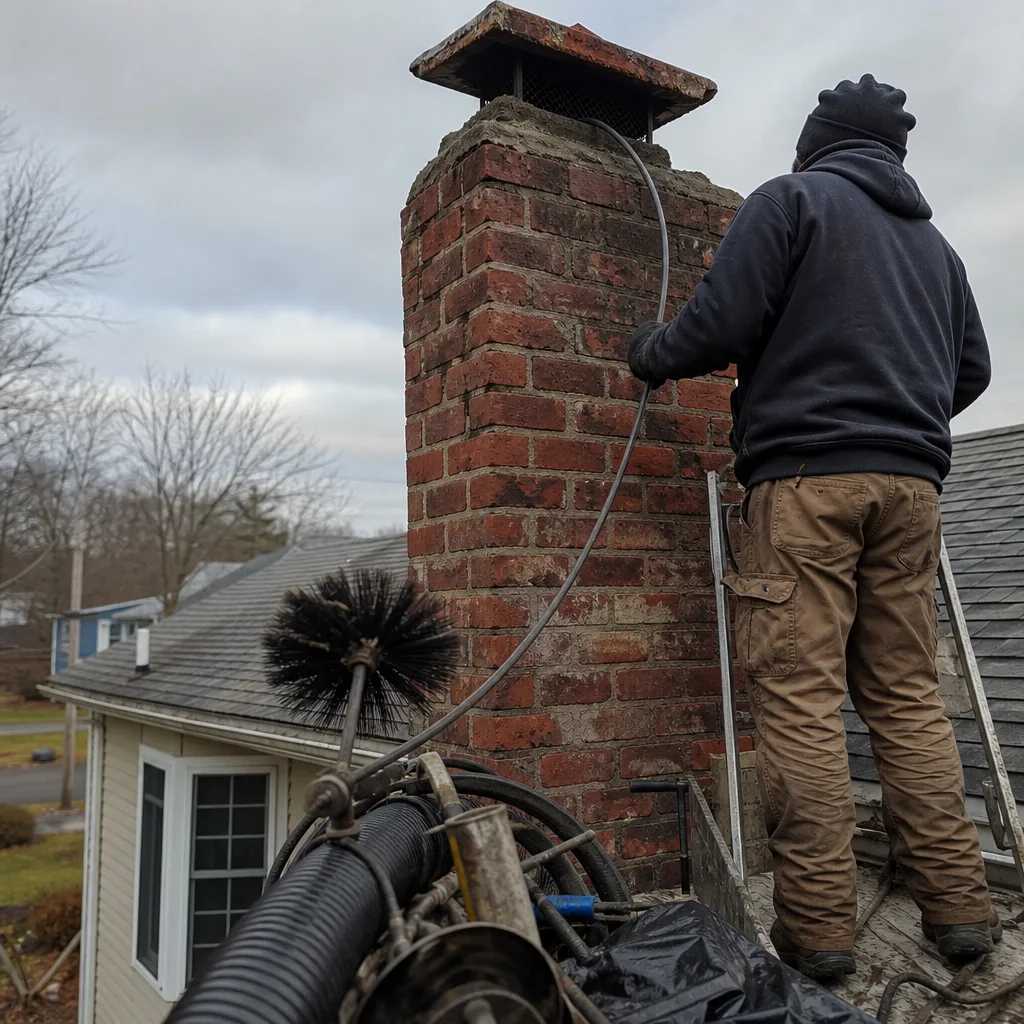 Before
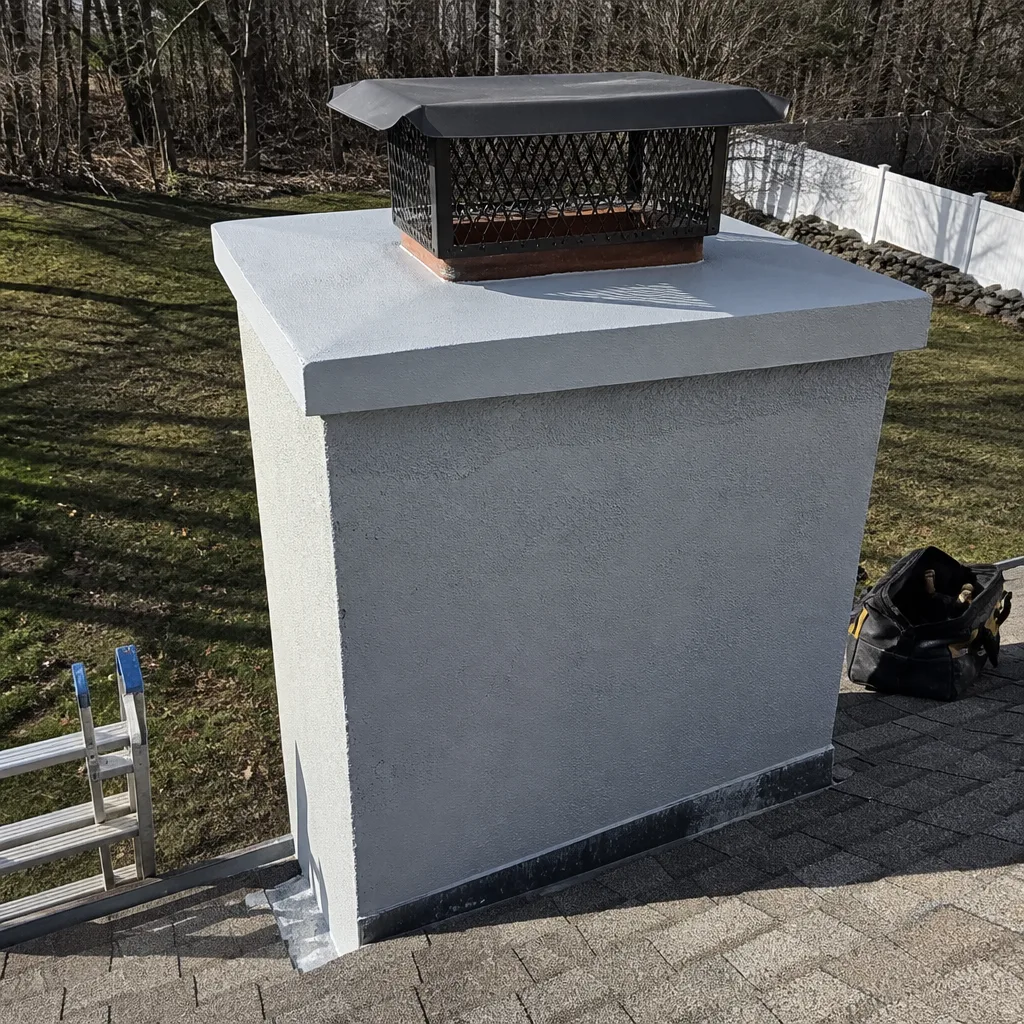 After
AfterChimney Cleaning Warning Signs: A Shelton Homeowner’s Reference Guide
A fireplace that smells like campfire on a summer afternoon is not a quirk. It is a chimney telling you it has a draft reversal problem, and draft reversals are one of the primary ways carbon monoxide enters a home. In Shelton, where humid summers and freeze-thaw winters punish masonry year after year, the warning signs that a chimney needs cleaning or repair are rarely dramatic. They are small, consistent, and easy to explain away until they are not. This guide teaches you to recognize them at the stage when action is cheap, not after something has already gone wrong. Every sign listed here has a specific cause and a plain description of what it means.
Quick Answer
The seven warning signs that your chimney needs cleaning or repair are: persistent sour or smoky odors, smoke entering the room during operation, black shiny creosote deposits in the firebox, white efflorescence staining on exterior masonry, debris or animal nesting sounds, visible rust in the firebox or damper, and a damaged or missing chimney cap. In Shelton’s climate, these signs typically appear between 12 and 18 months after the last professional sweep, sooner if you burn unseasoned wood or run the fireplace daily. For a deeper look at each warning sign, see our The Complete Guide to Chimney Cleaning in Shelton.
Table of Contents
- The Seven Sensory Indicators You Can Detect Without Tools
- White Staining on Your Chimney Exterior: What Efflorescence Actually Means
- Draft Problem or Creosote Problem: How to Tell the Difference
- The One Firebox Sign That Means Stop Using the Fireplace Immediately
- What a Missing or Damaged Chimney Cap Looks Like From the Ground
- How Shelton’s Climate and Building Stock Affect Chimney Health
- What Happens During a Level-2 Camera Inspection
- Common Mistakes to Avoid
- When to Call a Professional
- Frequently Asked Questions
The Seven Sensory Indicators You Can Detect Without Tools
You do not need a ladder, a camera, or specialized equipment to catch most chimney problems early. You need attention to what your senses report during ordinary life in your home. Here are the seven indicators we ask every Shelton homeowner to monitor, with what each one means diagnostically.
1. Persistent Sour or Smoky Odors
A clean chimney smells like nothing, or faintly like the last fire you burned. When you notice a sour, acrid smell on humid days or a strong smoke odor when the fireplace has not run in weeks, creosote has accumulated to the point where it is off-gassing. The smell intensifies in summer because warm, moist air rises through the house and carries those volatile compounds down into your living space. In Shelton’s river-valley humidity, we see this complaint spike every July and August. The odor is not just unpleasant; it signals that creosote deposits have reached a volume where a chimney fire becomes possible.
2. Smoke Entering the Room During Operation
Smoke should exit through the flue. When it does not, the cause falls into one of two categories: obstruction or draft failure. A partially blocked flue from creosote buildup, a bird’s nest, or collapsed liner pieces forces smoke backward. Draft failure happens when the temperature differential between indoor and outdoor air is too small to create upward draw, or when competing appliances (kitchen exhaust, dryer vent) pull air down the chimney. The solutions differ completely, which is why we address this separately below.
3. Black, Shiny Deposits in the Firebox
Normal wood ash is matte gray and powdery. When you see black, glossy, almost tar-like deposits on the firebox walls or damper, you have Stage 2 creosote. This is not a cleaning issue for later. This is a stop-using-the-fireplace issue now. We cover this in depth in its own section.
4. White, Powdery Staining on Exterior Masonry
Efflorescence looks like someone dusted your chimney with chalk. It is not cosmetic. It is mineral salts left behind when water moves through masonry and evaporates at the surface. The water source is the problem: failed crown, deteriorated mortar joints, or flashing that has separated from the roofline. In Shelton’s freeze-thaw climate, this water expands when it freezes, accelerating brick spalling and structural damage. We address this fully below.
5. Debris or Animal Sounds
Scratching, chirping, or rustling from the flue indicates a trapped animal or active nesting. Squirrels, raccoons, and chimney swifts are common in Shelton’s mature neighborhoods, particularly those near the Housatonic River corridor and the wooded areas around Indian Well State Park. A nest is a fire hazard and a carbon monoxide risk. Do not attempt to smoke out an animal. Call for removal and cap installation.
6. Visible Rust in the Firebox or on the Damper
Rust means water is getting in. The damper is your first checkpoint: if it rusts open or closed, you lose control of the flue. Rust in the firebox indicates water running down from above, typically through a cracked crown or failed flue liner. Rust never resolves itself. It accelerates.
7. A Damaged or Missing Chimney Cap
From the ground, look for a cap that is tilted, dented, missing entirely, or sitting crooked on the flue tile. The cap is your chimney’s only defense against rain, debris, and animals. Its absence accelerates every other problem on this list. We detail what to look for in a dedicated section below.
White Staining on Your Chimney Exterior: What Efflorescence Actually Means
Efflorescence is the white, powdery deposit that appears on brick, block, or stone surfaces. It is composed of soluble salts, calcium, and magnesium compounds that dissolve in water moving through masonry and crystallize at the surface as the water evaporates. The deposit itself is harmless. The water movement that creates it is not.
In Shelton, we see efflorescence most often on chimneys in neighborhoods built during the 1960s through 1980s, where the original crown was poured as a simple mortar wash rather than a proper concrete cap with drip edge. The Housatonic Valley’s wet springs and humid summers provide constant moisture, while January temperatures that regularly drop into the single digits drive freeze-thaw cycles that open hairline cracks into active water paths.
When we document efflorescence during a chimney repair in Shelton, we photograph the pattern because it tells us where the water originates:
- Staining concentrated at the crown line indicates crown cracking or insufficient overhang, allowing water to run directly down the masonry face.
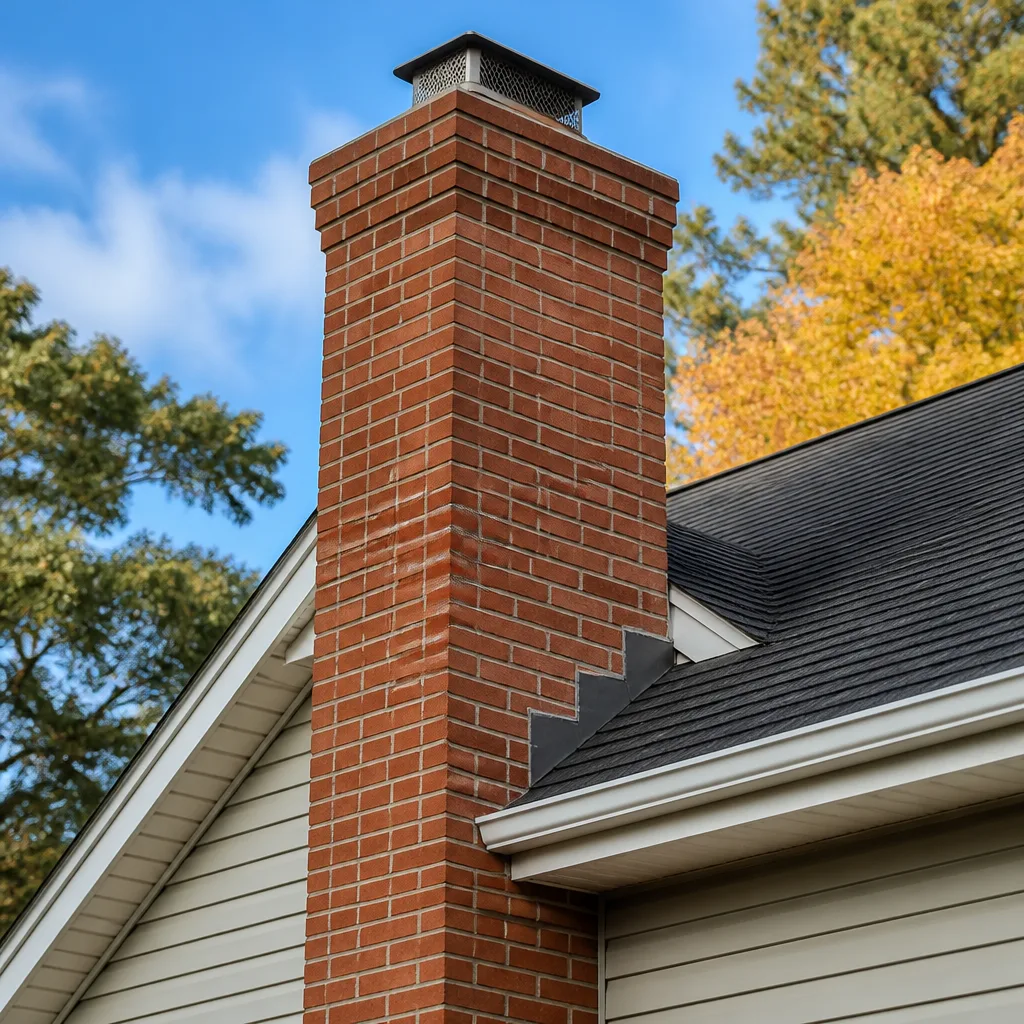
- Staining in vertical streaks below the roofline points to flashing separation, often where step flashing has pulled from the brick or counter-flashing has lost its seal.
- Staining at the base of the chimney, near ground level suggests rising damp from foundation moisture, common in split-level homes built on Shelton’s sloped terrain.
- Staining on only one face of the chimney reveals directional weather exposure; the southwest face takes the worst of driving rain in our climate.
The critical distinction: efflorescence that brushes off easily is recent and may indicate an active leak. Efflorescence that has hardened into a crust or caused surface spalling means the water intrusion has been ongoing long enough to damage the masonry matrix. At that stage, repointing or partial rebuild may be necessary, not just sealing.
We use professional-grade crown repair materials from HeatShield and Gelco for crown restoration, and Copperfield flashing components where metal replacement is indicated. The repair is documented with before-and-after photos, and the cause is explained in plain terms before any work proceeds.
Draft Problem or Creosote Problem: How to Tell the Difference
Smoke in your living room feels the same regardless of cause: alarming, unpleasant, and urgent. But the underlying problem and its solution differ by hundreds of dollars and sometimes by the type of professional you need. Learning to distinguish them saves time and prevents unnecessary work.
Signs Pointing to Creosote or Physical Obstruction
- Smoke enters the room only after the fire has been burning for 10-15 minutes, when the flue has had time to warm.
- The smoke smells strongly of incomplete combustion, with a sharp, oily quality rather than clean wood smoke.
- You have not had the chimney swept in 12+ months, or you burn unseasoned wood (moisture content above 20%).
- The damper is fully open and the fire is small; even a modest fire produces smoke backup.
- You hear debris shift or fall when the damper moves, or the flue draw feels weak when you hold a flame near the opening.
Creosote buildup narrows the flue diameter and creates turbulent airflow. Stage 1 creosote is sooty and removable with standard sweeping. Stage 2 is shiny and tar-like, requiring rotary cleaning or chemical treatment. Stage 3 is hardened, glazed, and often requires replacement of the liner if it cannot be mechanically removed without damage.
Signs Pointing to Draft Failure
- Smoke enters immediately upon lighting the fire, before the flue has had time to establish temperature differential.
- The problem is worse on mild days (40-55°F) than on cold nights, because the chimney draft depends on the temperature gap between flue gases and outdoor air.
- Running the kitchen range hood, bathroom exhaust, or clothes dryer makes the problem worse; these appliances depressurize the house and compete for air.
- The fireplace worked fine last season, and you have not changed fuel or burning habits.
- Smoke spills from the fireplace only during startup, then draws properly once the flue is hot.
Draft problems in Shelton often trace to house tightening: new windows, added insulation, or a remodeled kitchen with a powerful exhaust fan. The chimney has not changed; the building envelope has. Solutions include a top-sealing damper to preserve heat in the flue, an outside air kit for the fireplace, or in some cases, extending the chimney height to improve draw in wind-sheltered locations.
The diagnostic test we use: with the fire out and the damper open, hold a lit match or incense stick at the firebox opening. If the smoke draws upward strongly, the flue is clear and the problem is draft. If it wavers, spills outward, or shows no movement, obstruction is likely. We document this during every chimney cleaning and sweep in Shelton so the homeowner sees the evidence.
The One Firebox Sign That Means Stop Using the Fireplace Immediately
There is a single visual indicator that changes everything about how urgently your chimney needs professional attention. It is not the amount of ash. It is not whether the damper moves freely. It is the character of the creosote deposit itself.
Normal combustion residue: matte gray, powdery, brushes off with a finger.
Stage 2 creosote: black, shiny, tar-like, sticky to the touch, sometimes with visible drips or runs on the firebox walls.
When you see the second description, stop using the fireplace. Do not burn another fire hoping it will clear out. Do not assume a standard sweep will handle it. Stage 2 creosote has begun to melt and resolidify in layers, creating a fuel source that ignites at approximately 451°F, well within the temperature range of a normal fireplace operation. A chimney fire fueled by Stage 2 creosote can reach 2,000°F, sufficient to crack clay flue tiles, warp metal liners, and penetrate to combustible framing.
In our 42 years of service, we have responded to chimney fire calls in Shelton’s Pine Rock Park, White Hills, and Booth Hill neighborhoods where the homeowner noticed the shiny deposits, continued burning, and experienced a flue fire weeks later. The pattern is consistent: the shiny deposit is the warning that the standard burning cycle has already produced conditions beyond normal maintenance.
Stage 2 creosote requires mechanical removal with rotary whips or chains, sometimes preceded by chemical treatment to soften the deposit. We use Copperfield professional-grade rotary systems and apply a creosote-modifying powder when the buildup warrants it. The work is messier, takes longer, and costs more than standard sweeping. It is still far less expensive than rebuilding after a fire.
If you are uncertain whether your deposit is Stage 1 or Stage 2, send us a photo. We will tell you plainly what we see and whether the fireplace should be out of service until we inspect.
What a Missing or Damaged Chimney Cap Looks Like From the Ground
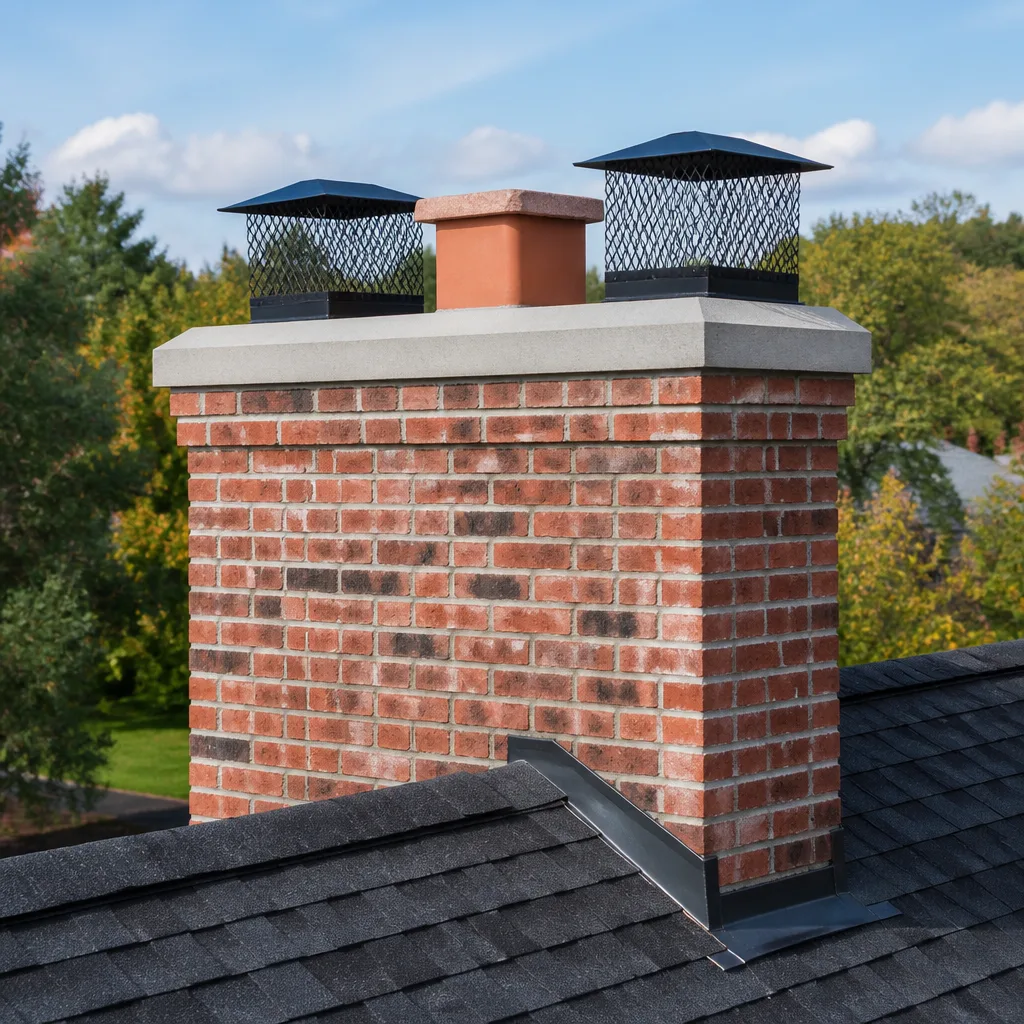
The chimney cap is a simple component with an outsized role in chimney longevity. It sits atop the flue termination, typically a stainless steel or copper hood with mesh sides that allows smoke to exit while blocking rain, animals, and debris. When it fails or disappears, every other problem on this list accelerates.
Visual Inspection From the Ground
Stand at a distance where you can see the chimney top against the sky. A proper cap sits level, centered over the flue tile, with mesh sides intact and no visible gaps. Look for these failure modes:
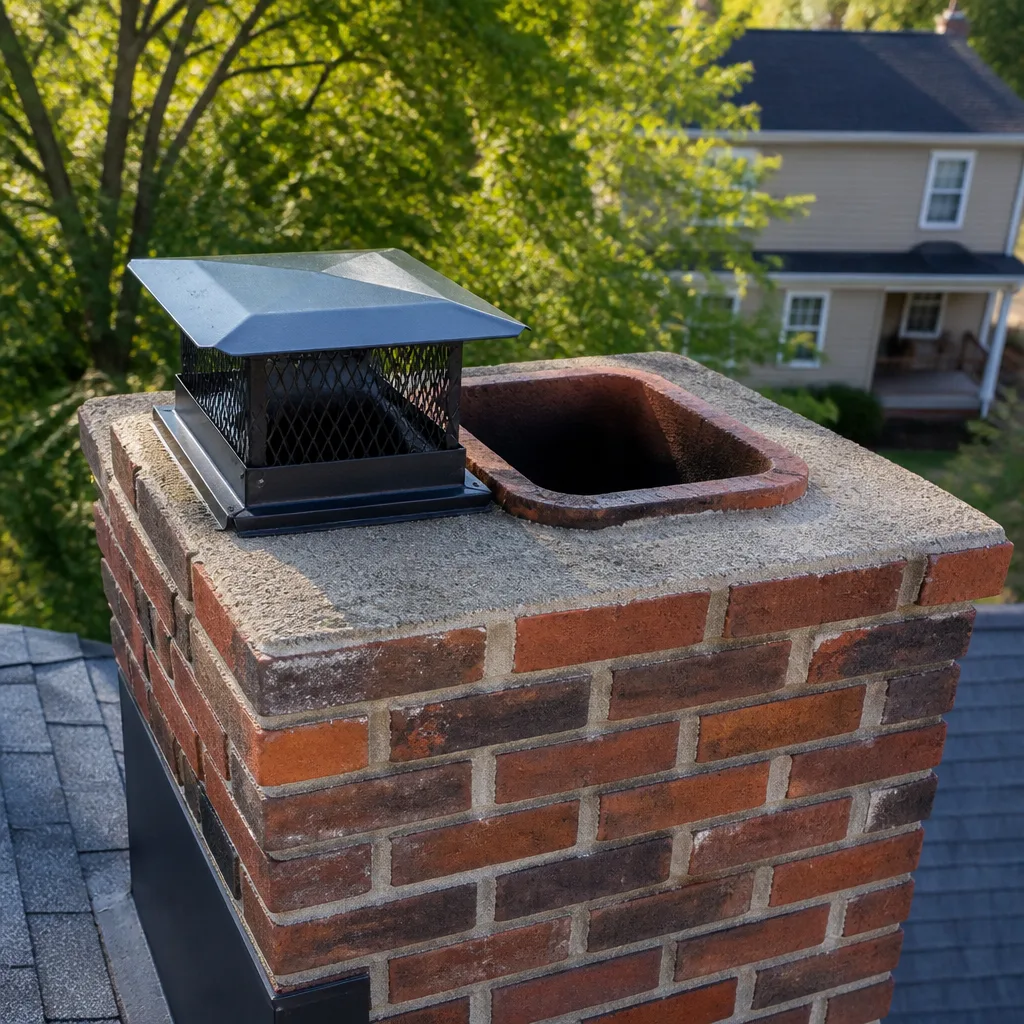
- Tilted or displaced cap: Often caused by ice damming, wind gusts, or animal impact. The mesh may be crushed against the flue, blocking smoke exit.
- Missing mesh sides: The hood remains but the screening is gone, torn away by squirrels or rusted through. Rain enters freely; animals follow.
- No cap visible at all: The flue tile terminates flush with the crown, completely exposed. This is common after cap blow-off during storms, which Shelton sees several times each winter.
- Corroded or perforated hood: Galvanized caps rust through in 5-7 years in our climate. Stainless steel and copper caps from Famco and Gelco last decades but still require inspection.
- Improperly sized cap: Too small and it does not cover the flue; too large and it creates turbulence that drives rain sideways onto the crown.
What Accelerates Without a Cap
Rain enters the flue directly, wetting creosote deposits and accelerating corrosion of metal liners and dampers. In Shelton’s hard-water environment, mineral deposits from evaporating flue moisture contribute to liner degradation. Animals nest in the flue, creating obstruction and introducing parasites and odor. Leaves and twigs accumulate, particularly from the oak and maple canopy that shades many of our older neighborhoods. Each of these problems compounds the others.
Cap replacement is straightforward and relatively inexpensive. We install caps with proper clearance dimensions and secure mounting that withstands our wind exposure. The work is documented with photos from the roof level, which most homeowners never see themselves.
How Shelton’s Climate and Building Stock Affect Chimney Health
Shelton sits in the Housatonic River valley with elevations ranging from river level to over 500 feet on the Huntington and White Hills ridges. This topography creates microclimates that matter for chimney performance. Lower-lying areas near the river experience higher humidity and more frequent temperature inversions that suppress draft. Hilltop homes face greater wind exposure and faster freeze-thaw cycling on exposed masonry.
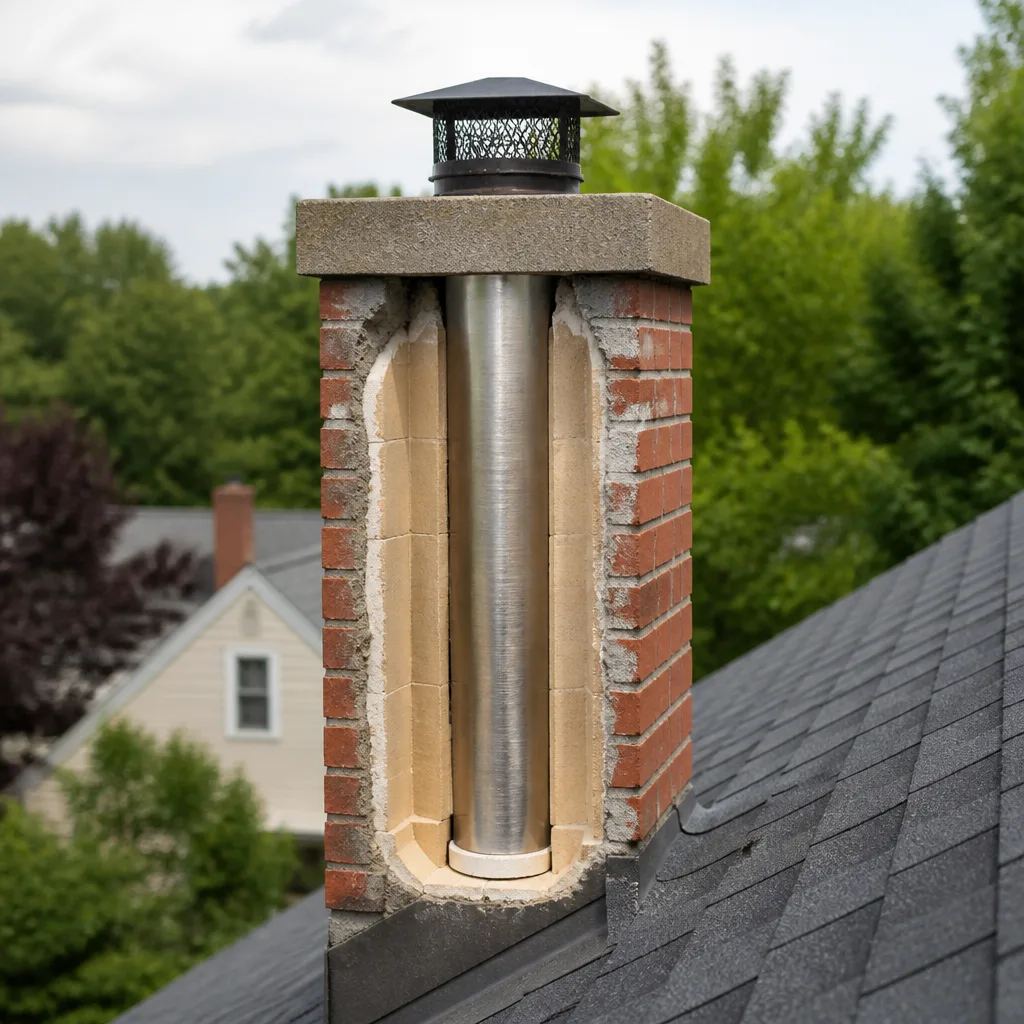
The city’s housing stock is predominantly mid-century through 1980s construction: cape cods, raised ranches, and split-levels with masonry chimneys built to codes that predated modern understanding of flue gas condensation and liner requirements. Many of these chimneys have unlined flues or original clay liners that have cracked from thermal shock. In the Booth Hill and Pine Rock Park areas, we regularly find chimneys with no liner at all, or a liner that ends short of the flue top, creating a gap where creosote accumulates and water enters.
Shelton’s burning season runs roughly October through April, with peak demand in December and January when temperatures drop into the teens. Homeowners who burn daily during this period generate creosote faster than annual sweeping can manage if the wood is not properly seasoned. The local market for firewood includes significant unseasoned stock; we advise checking moisture content with a meter, not trusting the seller’s word.
The city’s building department requires permits for chimney liner replacement and structural repair, but not for routine sweeping or cap installation. We handle permit applications as part of our repair workflow when they are required, and we know the inspectors by name from decades of working together.
For fireplace services in Shelton that address these climate-specific challenges, we assess each installation for draft adequacy, liner compatibility, and combustion air supply before recommending equipment or modifications.
What Happens During a Level-2 Camera Inspection
The National Fire Protection Association Standard 211 requires a Level-2 inspection at property transfer, after chimney fire or lightning strike, and whenever the heating appliance or flue liner is changed. We recommend it for any homeowner who has not had documented interior flue images in the past five years, regardless of apparent condition.
A Level-2 inspection is non-destructive and comprehensive. Here is what we do, in order:
- Exterior documentation: We photograph the chimney from ground level, roof level, and where accessible, the crown and cap condition. We note efflorescence patterns, spalling, and flashing integrity.
- Firebox and damper assessment: We inspect the firebox walls, throat damper operation, smoke shelf, and lintel condition. We look for the shiny Stage 2 deposits described above, and for rust indicating water intrusion.
- Video scanning: We run a high-resolution camera up the full length of the flue, recording continuous video. The camera reveals cracks, gaps, offset joints, creosote buildup patterns, and moisture staining that no visual inspection from above or below can catch.
- Real-time review: The homeowner watches the video with us on a tablet as we narrate what we see. There is no mystery, no “trust us” moment. You see what we see.
- Plain-English verdict: We classify findings as routine maintenance, monitor-and-repair-soon, or safety-critical. We explain what each finding means for operation, what it will cost to address, and what happens if you defer.
- Written report with photos: You receive the video file, still images of significant findings, and a written summary suitable for insurance or real estate documentation.
The entire process takes 60-90 minutes for a typical single-flue chimney. We schedule at your convenience, and our technicians arrive in uniform with background checks completed. The inspection fee is applied toward any repair work you choose to proceed with.
We use DuraFlex and HeatShield liner and resurfacing products when repair is indicated, installed to manufacturer specifications and documented with completion photos. Every repair carries our 90-Day Done Right Promise in writing: if it is not right, we come back, no arguing, no paperwork chase.
Common Mistakes to Avoid
- Assuming a gas fireplace means no chimney maintenance. Gas appliances produce water vapor and corrosive condensation that deteriorate liners and masonry. Annual inspection is still required, even when no creosote is present.
- Burning unseasoned wood because it is cheaper or locally available. Wood with moisture above 20% burns incompletely, producing up to three times the creosote of properly seasoned fuel. In Shelton’s humid summers, even “seasoned” wood often needs additional drying time under cover.
- Installing a chimney cap yourself from a big-box store without sizing verification. An improperly sized cap creates downdraft, traps moisture, or blows off in the first storm. We measure flue dimensions and install caps with proper clearance and secure mounting.
- Ignoring summer odors because “the fireplace isn’t in use.” The odor is the chimney’s only available signal during off-season. Addressing it in July prevents a blocked or deteriorated flue from surprising you in October.
- Accepting a sweep that does not include interior flue inspection. A brush run from the roof without visual documentation misses cracked liners, hidden obstructions, and creosote buildup patterns that determine whether standard sweeping is sufficient.
- Deferring repair because “we’ll sell soon anyway.” Connecticut disclosure requirements include chimney condition. Deferred maintenance becomes your negotiation liability, and in the meantime, you live with the safety risk.
- Attempting to remove creosote with chemical logs or home remedies. Chemical logs modify creosote but do not remove it. They can also mask buildup that still requires mechanical cleaning. Professional removal is the only reliable method.
When to Call a Professional
Call when you detect any of the seven sensory indicators described in this guide. Call when you notice white staining on exterior masonry, even if it brushes off easily. Call when you are uncertain whether a deposit is normal ash or Stage 2 creosote. Call when you have purchased a home and have no documentation of the last professional inspection. Call when your chimney cap is missing, tilted, or damaged from winter storms.
Do not call because you are frightened into action. Call because you have observed something specific and want a plain-English assessment of what it means and what it costs to address. You can also explore more guides & resources to stay ahead of chimney problems. That is what we provide.
Hearthstone Chimney Co. offers free estimates in Shelton. A live person answers every call, 24 hours a day, 7 days a week. Reach us at (475) 265-6822. We will schedule at your convenience, arrive when we say, and leave you with photos you can see and a verdict you can understand.
Frequently Asked Questions
A standard chimney cleaning and inspection in Shelton typically ranges from $199 to $289 for a single-flue masonry fireplace, depending on accessibility and the amount of creosote buildup. If rotary cleaning for Stage 2 creosote is required, the range extends to $350-$450. We provide no-hassle upfront pricing before any work begins; the estimate number is the invoice number. Call (475) 265-6822 for an exact quote; estimates are free.
The National Fire Protection Association recommends annual inspection, with cleaning as needed based on creosote accumulation. In Shelton’s climate, with our typical burn patterns, most wood-burning fireplaces need sweeping every 12 to 18 months. Daily burners, those using unseasoned wood, or fireplaces with older unlined flues may need attention every 6 to 9 months. A Level-2 camera inspection establishes your specific interval based on actual buildup rate, not calendar guessing.
You need a new liner when the existing one is damaged, improperly sized, or absent, and when continued use would create a fire or carbon monoxide hazard. We do not recommend liner replacement without camera evidence you can see: cracks, gaps, or deterioration documented in video and still images. In some cases, a damaged liner can be resurfaced with HeatShield cerfractory sealant rather than fully replaced, at significantly lower cost. We explain both options with their tradeoffs when the inspection supports them.
Skipped maintenance leads to progressive creosote accumulation, which increases chimney fire risk and reduces flue efficiency. Water intrusion from uncapped or deteriorated flues rusts dampers and damages fireboxes. Obstructions from animal nesting or debris collapse can force carbon monoxide into living spaces. In Shelton, we have responded to calls where deferred maintenance resulted in flue fires, structural damage requiring $4,000-$8,000 rebuilds, and in one case, carbon monoxide poisoning traced to a blocked flue. The cost of annual inspection and cleaning is a fraction of the cost of repair after failure.
Summer odors occur because warm, humid outdoor air sinks down the flue and activates creosote deposits, releasing volatile compounds. In winter, the hot flue gases create upward draft that carries those compounds outside. The smell is stronger in Shelton’s humid July and August weather. It is not a seasonal quirk; it is a signal that creosote volume has reached the threshold where odor becomes detectable, and it typically means the chimney is due for cleaning before the next burning season.
You can and should monitor the seven sensory indicators described in this guide: odors, smoke behavior, firebox deposits, exterior staining, sounds, rust, and cap condition. What you cannot do safely is inspect the interior flue, evaluate liner condition, or assess structural integrity from the roof. Those require proper equipment, training, and fall protection. We encourage homeowner vigilance for early warning signs and professional evaluation for anything beyond surface observation. Call (475) 265-6822 to schedule; estimates are free.
The Bottom Line
Chimney problems announce themselves quietly: a smell on a humid afternoon, a wisp of smoke where none belonged, a black shine on the firebox wall that was not there last season. The homeowner who recognizes these signals early avoids the emergency call, the flue fire, the carbon monoxide alarm, the rebuild that costs ten times what maintenance would have. In Shelton’s demanding climate, with its mature housing stock and freeze-thaw cycles, vigilance is not paranoia. It is the practical habit of someone who intends to stay in their home and use their fireplace safely for years to come.
We have served this region for over 42 years. We plan to be here for decades more. That long horizon shapes how we work: documented inspections, plain-English explanations, professional-grade materials, and a promise in writing that we stand behind. If you have noticed any of the warning signs in this guide, or if you simply do not know when your chimney was last professionally inspected, call us. We will tell you what we see, what it means, and what it costs. Then you decide.
Written by Russell Haines, Owner at Hearthstone Chimney Co., serving Shelton since 2014.