
Last updated September 10, 2026
Level 1 sweep and inspection to the NFPA 211 annual standard - flue, crown, cap, and flashing checked and photographed
Chimney sweep logs do not sweep chimneys. They loosen some creosote - which then falls where a brush and vacuum still have to collect it.
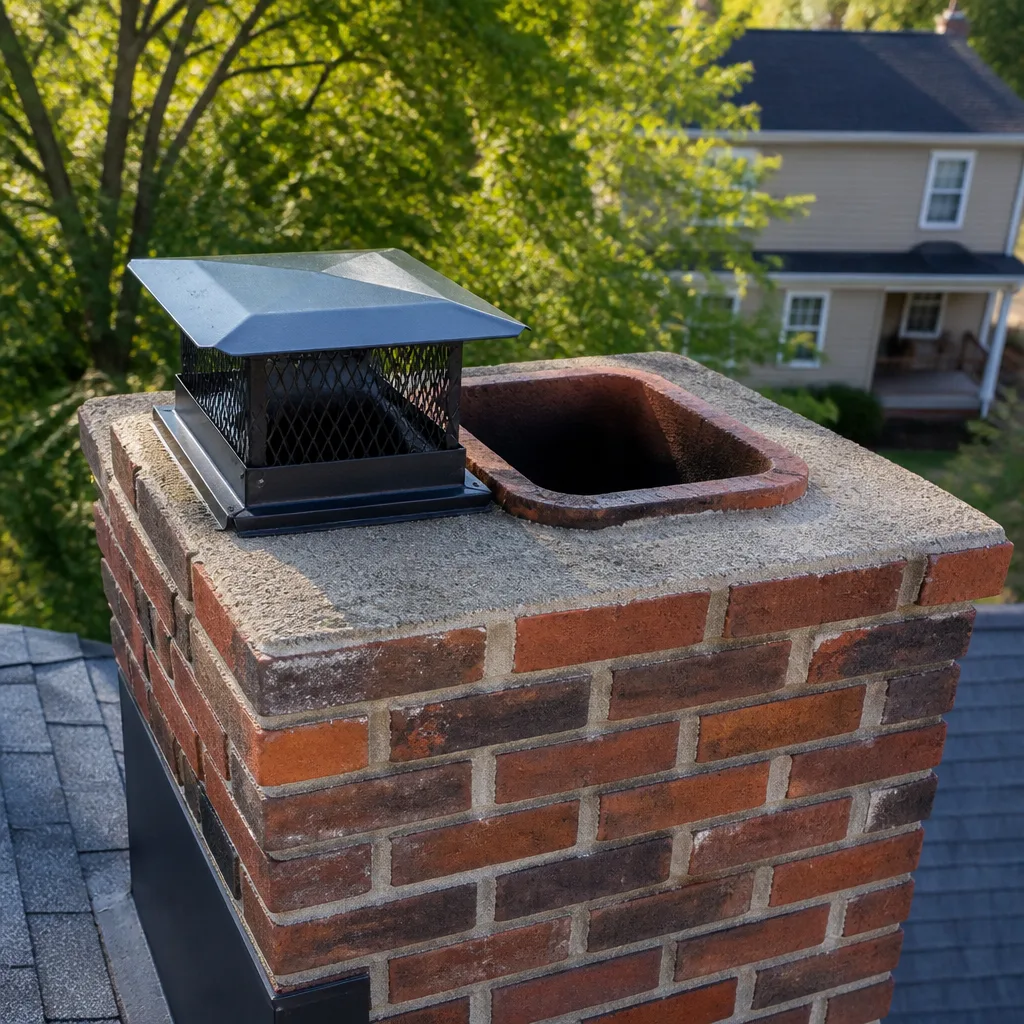
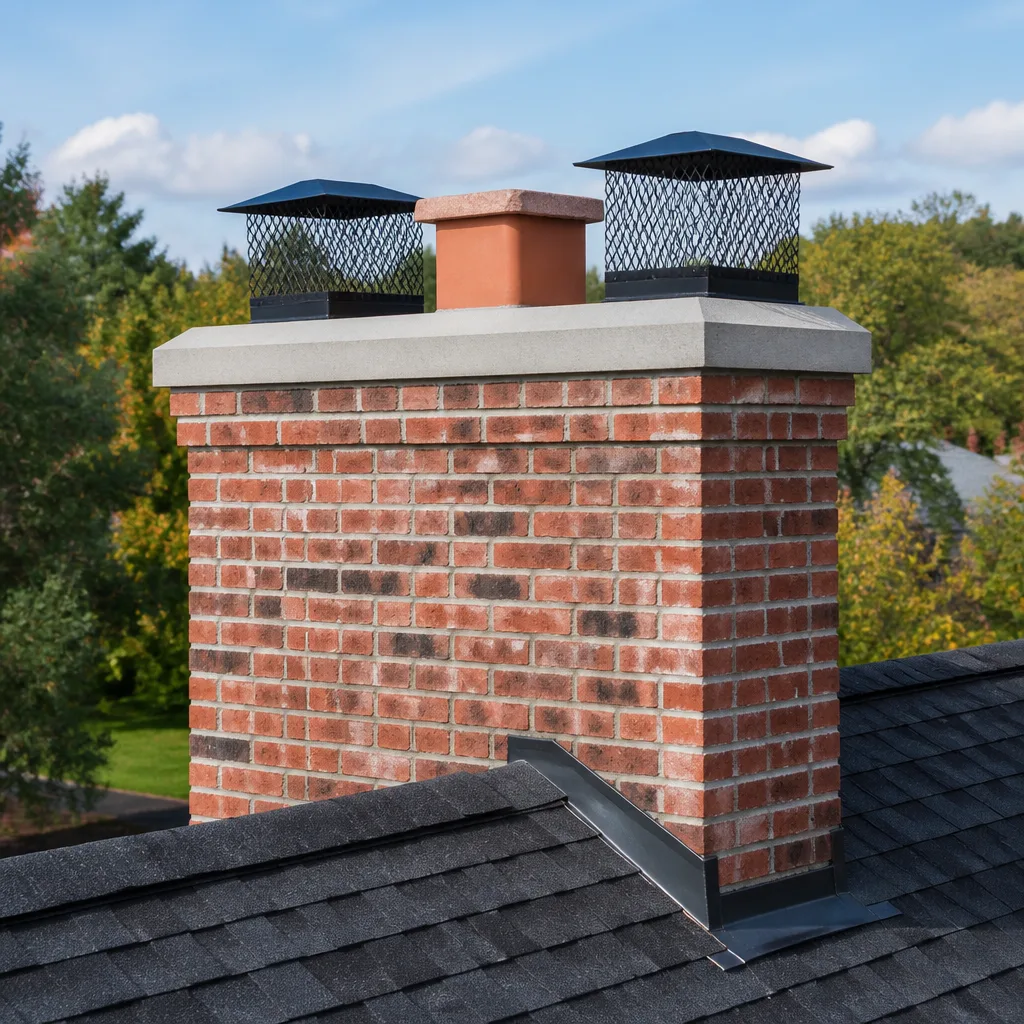
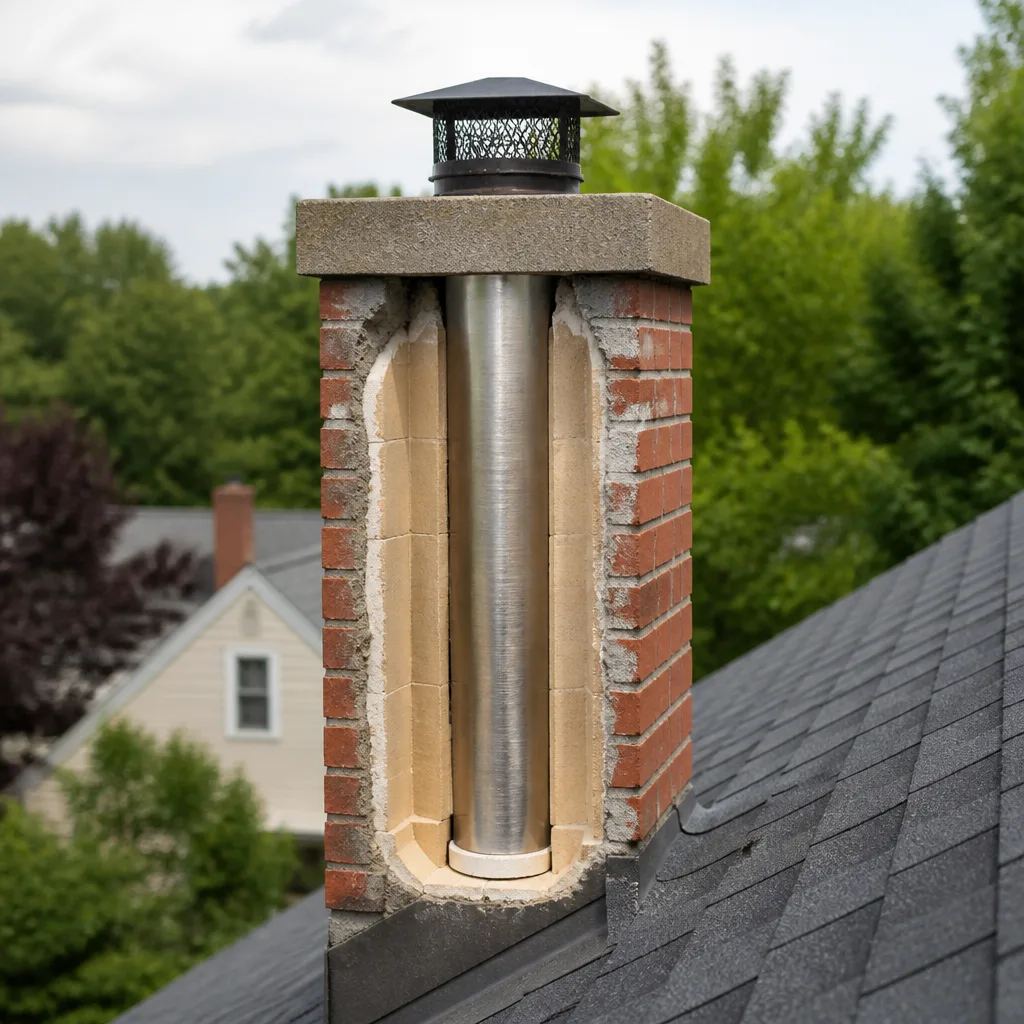
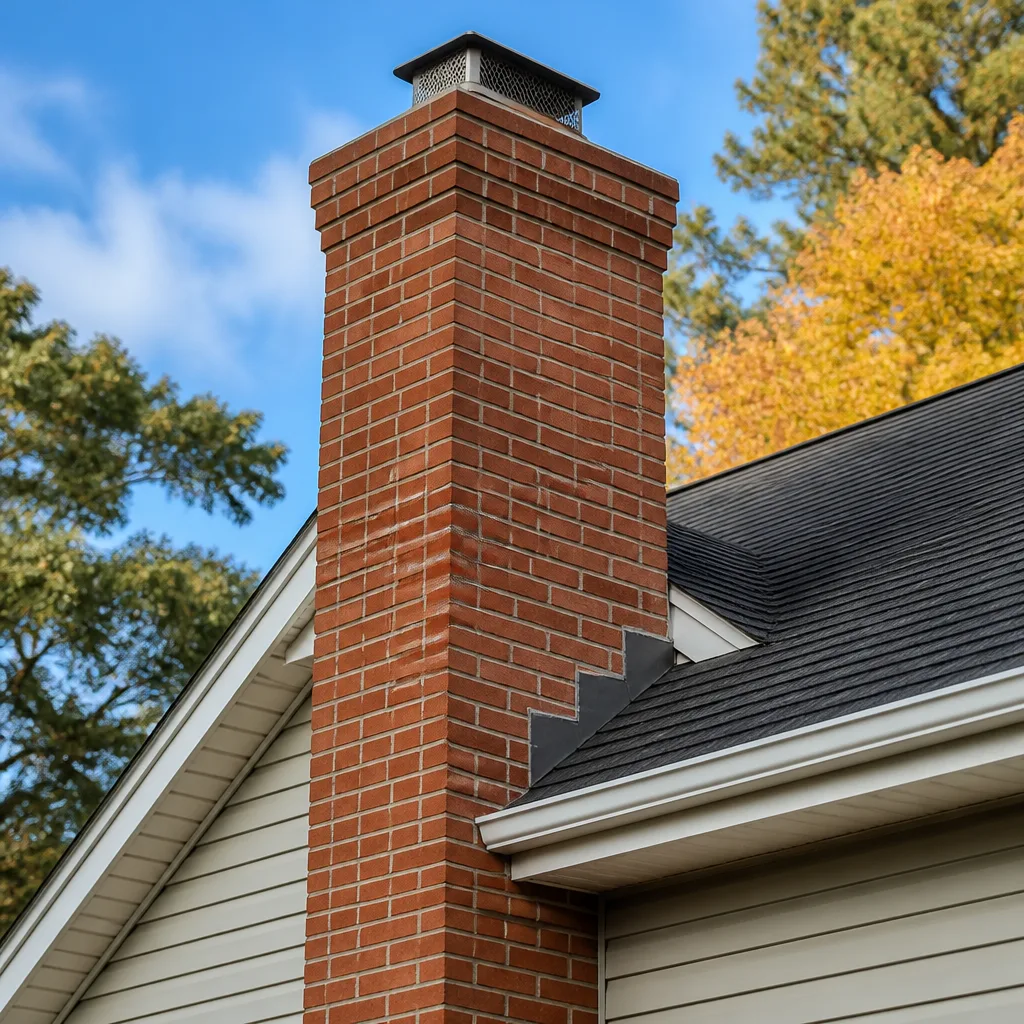
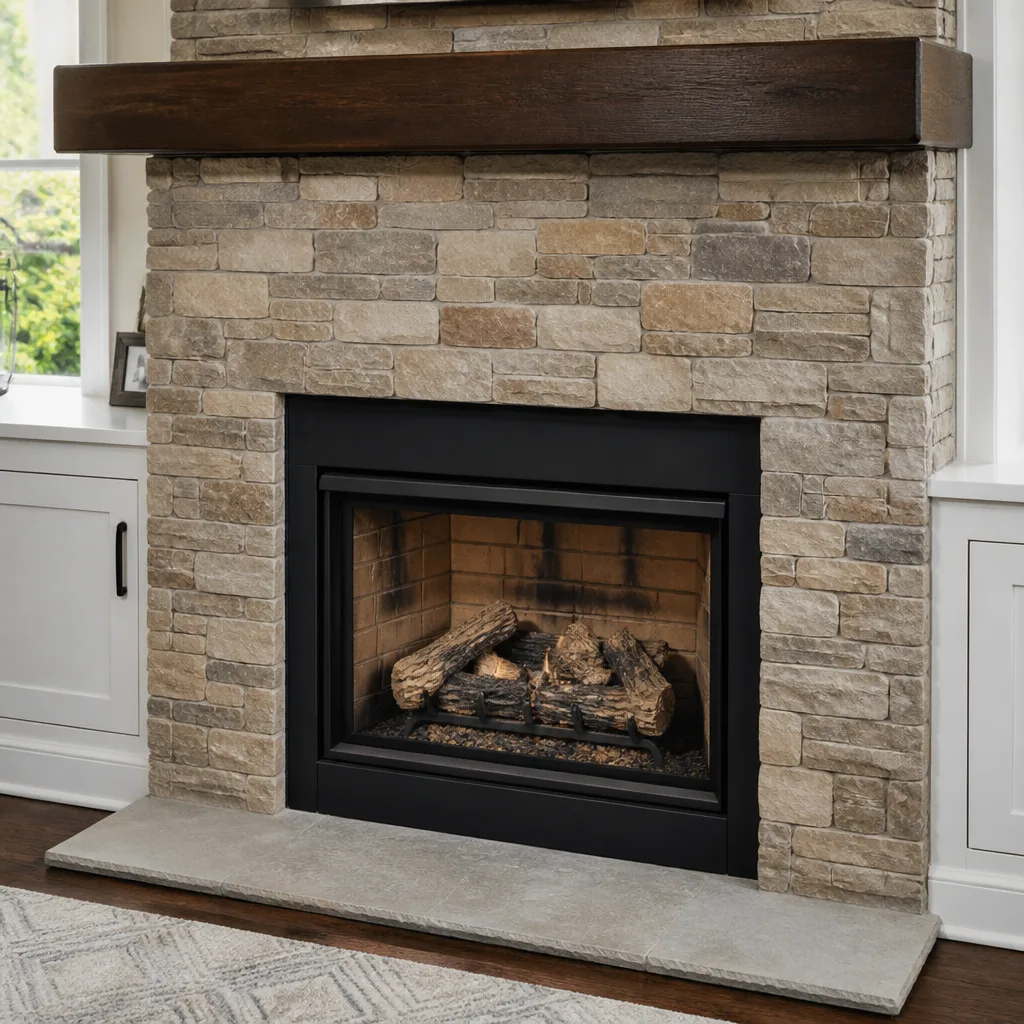
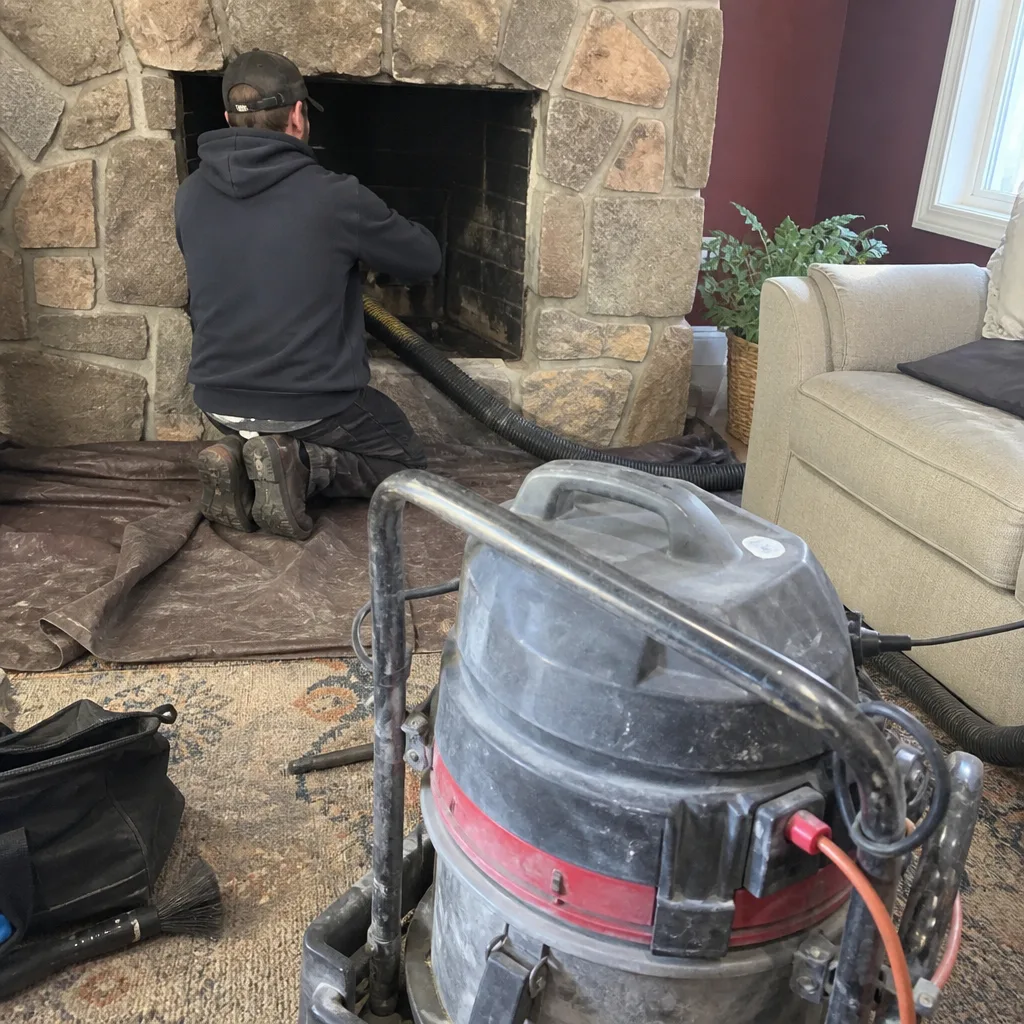 Before
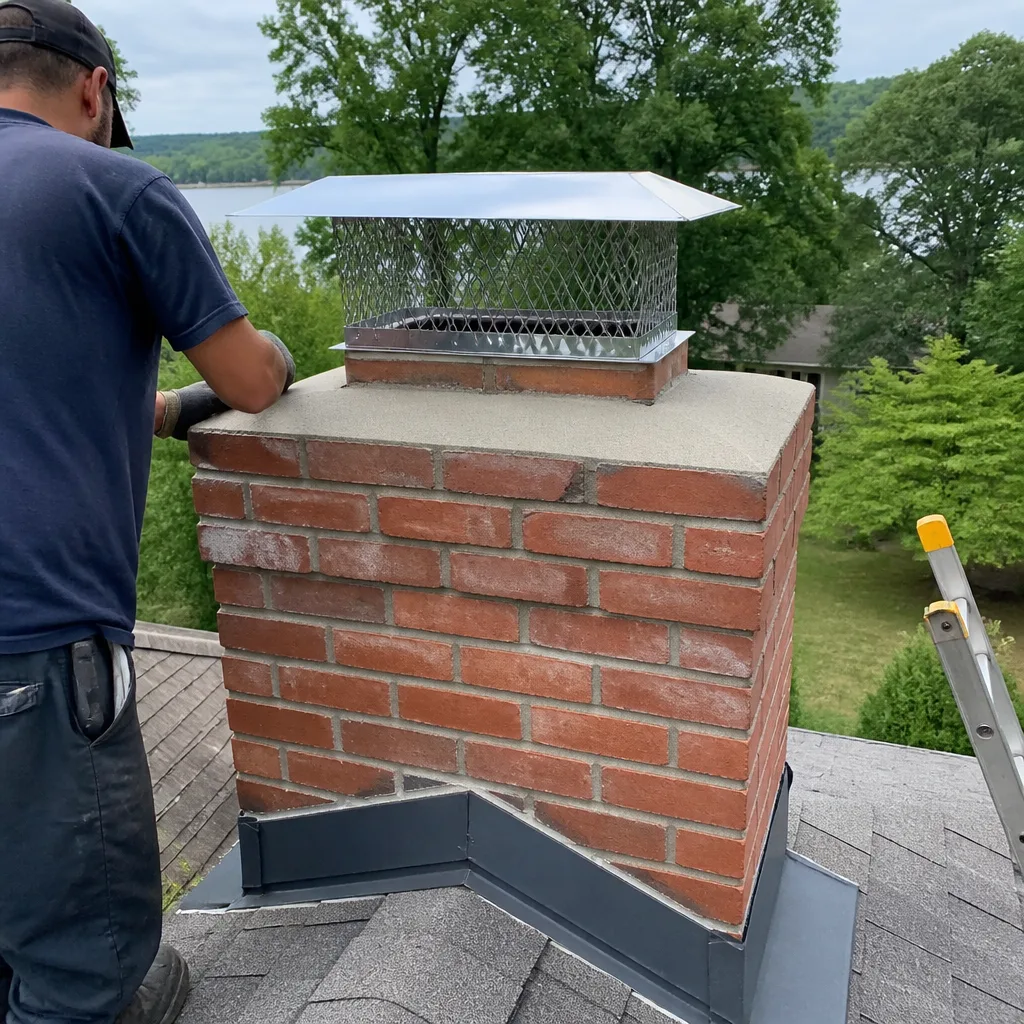 After
After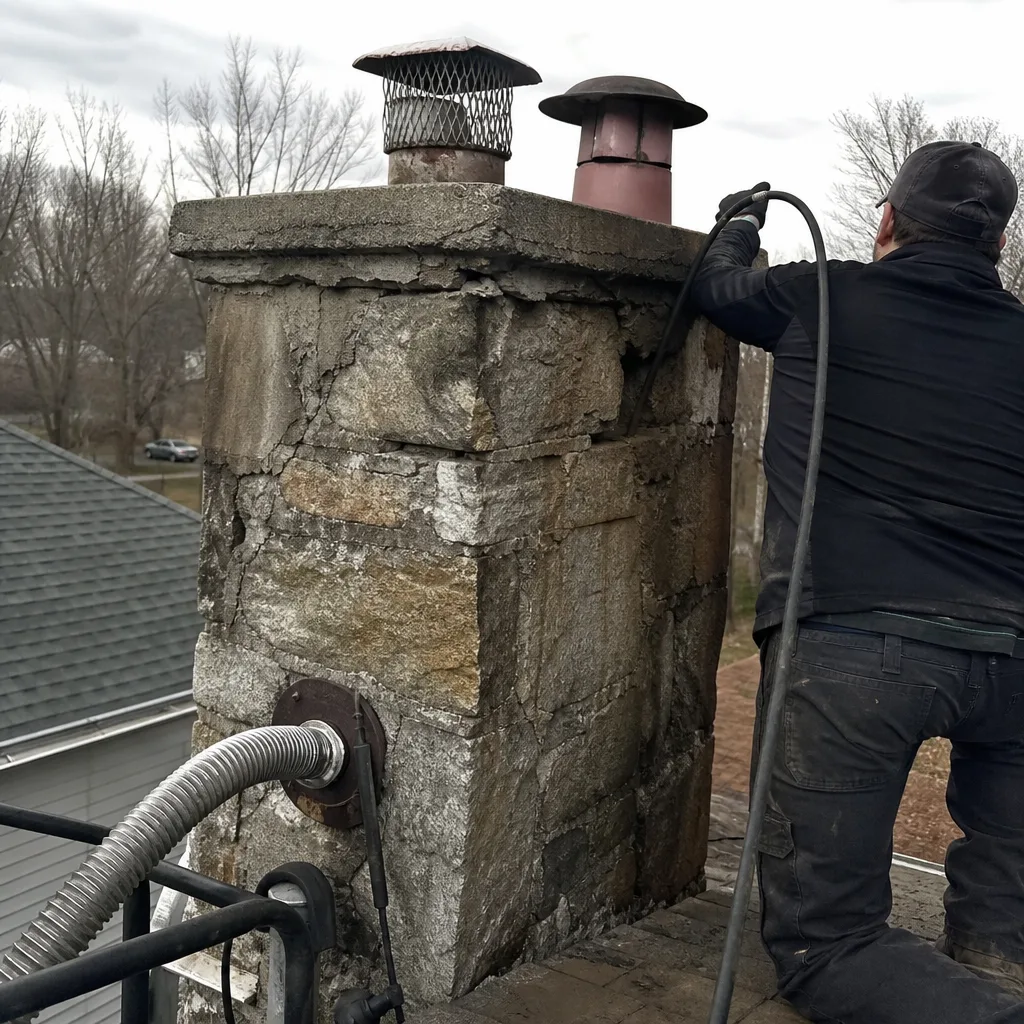 Before
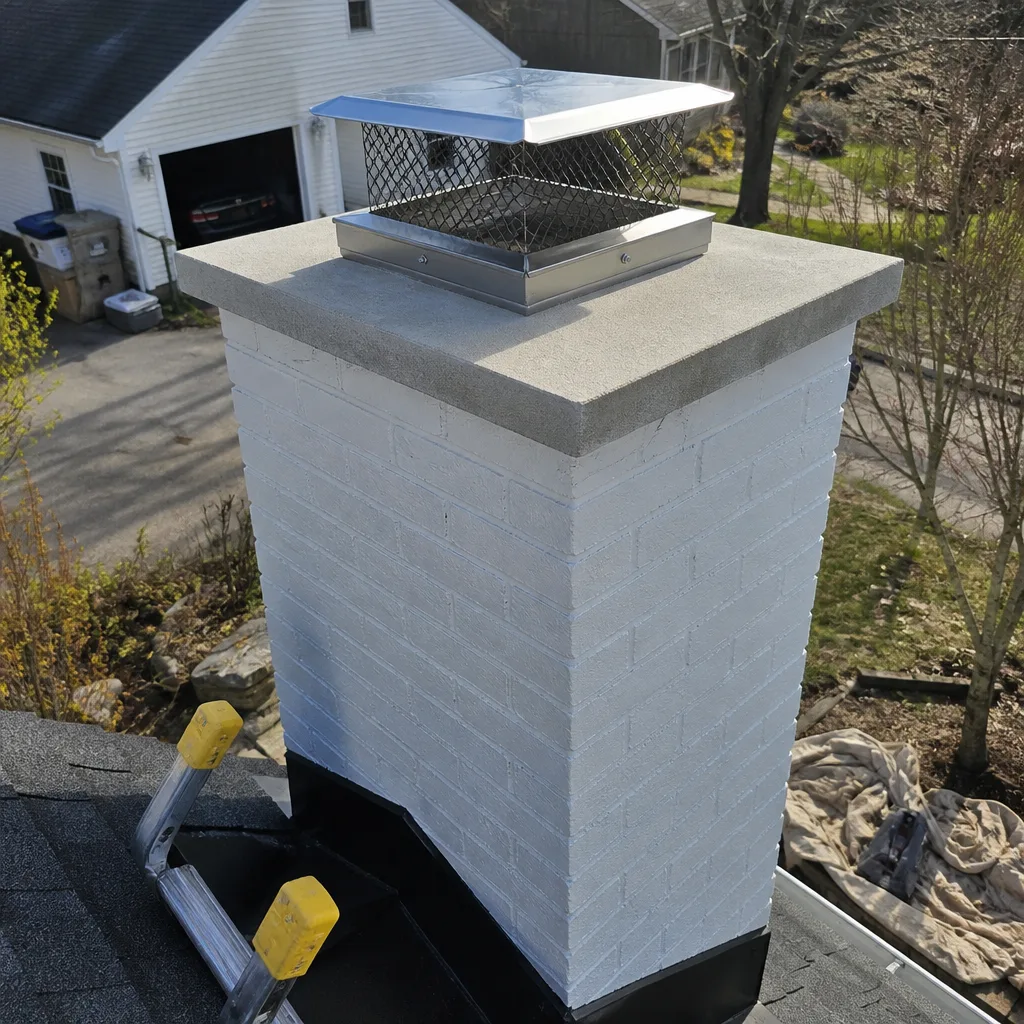 After
After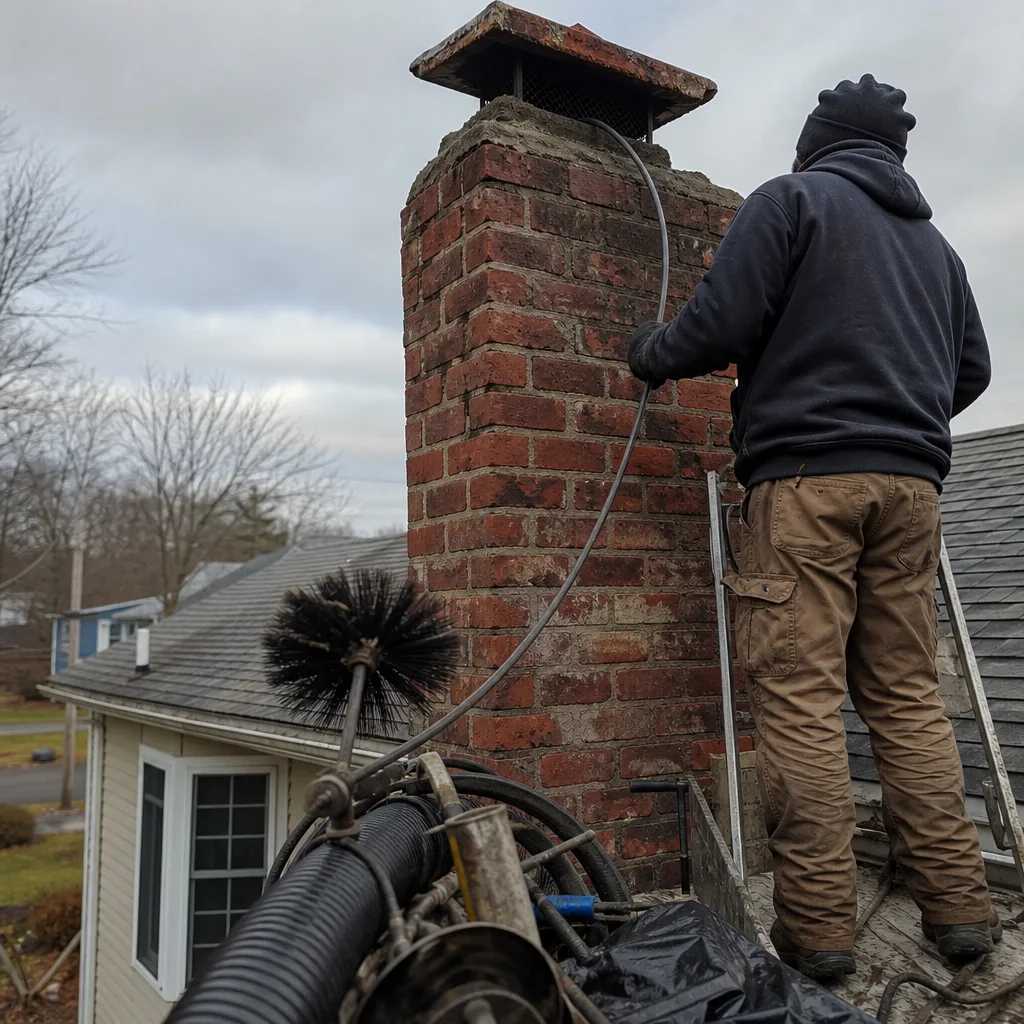 Before
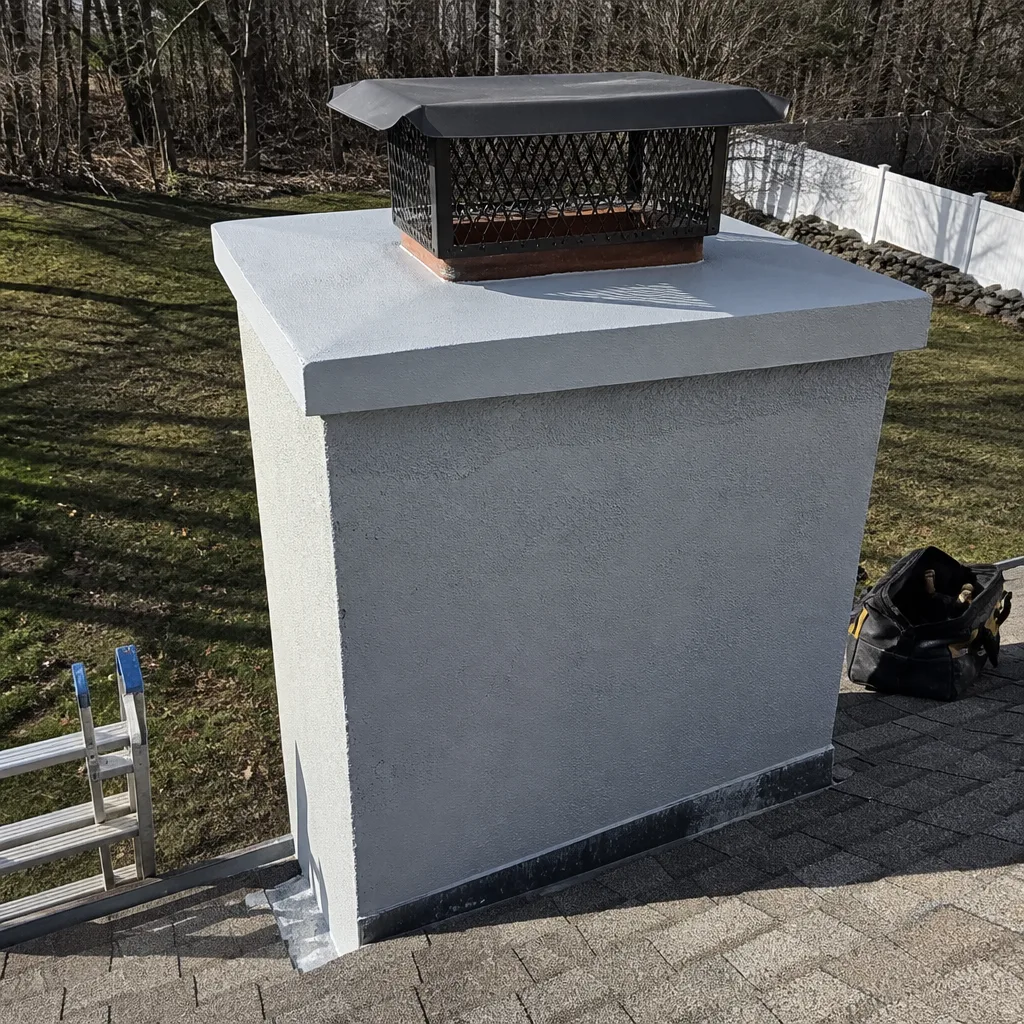 After
AfterChimney Cleaning Permits, Codes & Inspections in CT: What You Need to Know
A chimney relining in Connecticut without a building permit is not just a code violation - it is the kind of detail that surfaces during a home sale inspection and can kill a closing. We have seen it happen in Shelton, in Monroe, in Trumbull: a homeowner pays for what they believe is a complete repair, only to discover three years later that the work was never inspected, never signed off, and now needs to be redone at full cost before a buyer’s lender will release funds. This guide draws a clear line between chimney cleaning, which requires no permit in Connecticut, and the repairs and modifications that almost always do. For a deeper look at proper maintenance, see our Complete Guide to Chimney Cleaning in Shelton. You will learn which code sections apply, what documentation actually protects you, and how to verify that any work done on your chimney was properly permitted before you write the final check.
Quick Answer
Chimney cleaning and sweeping do not require a building permit anywhere in Connecticut, including Shelton. However, chimney repairs, relining, rebuilds, and appliance connections typically trigger permit requirements under the Residential Code for One- and Two-Family Dwellings (RCNYS, Chapter 10). A properly documented NFPA 211 inspection provides the baseline evidence that determines whether cleaning is sufficient or whether permitted repair work is legally required. Watch for chimney cleaning warning signs every Shelton homeowner should know.
Table of Contents
- Do You Need a Permit for Chimney Cleaning in Connecticut?
- Connecticut Chimney Codes: RCNYS Chapter 10 Explained
- How Shelton’s Building Department Handles Chimney Permits
- NFPA 211 Inspection Levels: What Code Actually Requires
- Insurance, Home Sales, and Why Your Receipt Is Not Enough
- How to Verify a Repair Was Properly Permitted and Inspected
- Common Mistakes to Avoid
- When to Call a Professional
- Frequently Asked Questions
Do You Need a Permit for Chimney Cleaning in Connecticut?
No. Routine chimney cleaning, sweeping, and basic maintenance require no building permit in Connecticut. This includes standard brush-and-vacuum removal of creosote deposits, debris clearing, and visual assessment of accessible components. The Connecticut State Building Code explicitly distinguishes between maintenance activities and construction, alteration, or repair work.
Where homeowners get tripped up is the gray zone that follows cleaning. A sweep removes creosote and may note cracked flue tiles, a deteriorated crown, or a missing cap. If the technician then proposes to install a stainless steel liner, rebuild the crown, or repoint mortar joints, that work crosses into permit territory. We see this confusion regularly in Shelton’s older neighborhoods - particularly in the Huntington and White Hills areas, where many chimneys date to the 1960s and 1970s and need more than just cleaning. Our Chimney Cleaning & Sweep Maintenance Checklist for Shelton Homeowners helps you track what’s maintenance and what triggers permits.
The distinction matters for three reasons:
- Insurance coverage: Unpermitted structural repairs may void portions of your homeowner’s policy if damage later occurs.
- Home sale liability: Connecticut disclosure forms ask directly about unpermitted work. A “no” that turns out to be wrong is a material misrepresentation.
- Code enforcement: While enforcement varies by municipality, Shelton’s building department can require permitted work to be exposed for inspection if discovered during other permitted projects.
Our recommendation: treat cleaning as a diagnostic event. The sweep tells you what the chimney needs. Before any repair begins, confirm whether a permit is required and who will obtain it. At Hearthstone Chimney Co. home, we handle permit applications for all repair work we perform in Shelton - we do not leave this to the homeowner unless they specifically request otherwise.
Connecticut Chimney Codes: RCNYS Chapter 10 Explained
Connecticut adopts the Residential Code for One- and Two-Family Dwellings (RCNYS) with state amendments. Chapter 10, “Chimneys and Fireplaces,” governs all new construction, alterations, and repairs. Understanding which sections apply to your situation prevents both under-compliance and unnecessary expense.
Key Code Sections for Homeowners
R1001 - Masonry Chimneys: Specifies construction standards for flue lining, wall thickness, height above roof, and clearance to combustibles. Any rebuild or structural modification must comply with current R1001 standards, not the standards in force when the chimney was originally built. This is where many “repairs” technically become “alterations” requiring permits.
R1003 - Chimney Termination: Addresses height requirements, proximity to windows and doors, and spark arrestor specifications. In Shelton’s wooded areas - particularly along the Far Mill River and Route 110 corridors - proper termination height matters for both code compliance and wildfire risk reduction.
R1005 - Factory-Built Chimneys: Governs metal chimney systems, including clearances, support, and connection to appliances. Installation of a new factory-built system or replacement of an existing one always requires a permit.
G2407 (Fuel Gas Code reference): When a chimney vents a gas appliance, additional venting requirements apply. Conversion from oil to gas heat, increasingly common in Fairfield County, frequently triggers chimney modification requirements.
What Triggers a Permit vs. What Does Not
| Activity | Permit Required? | Code Basis |
|---|---|---|
| Routine cleaning/sweeping | No | Maintenance exemption |
| Level 1 or 2 inspection | No | Diagnostic activity |
| Cap or damper replacement (direct fit) | Usually no | Minor repair exemption |
| Crown repair/rebuild | Yes | R1001 alteration |
| Flue relining (any material) | Yes | R1001/R1005 alteration |
| Repointing >25% of mortar joints | Yes | Structural repair |
| Smoke chamber parging | Yes | R1001 alteration |
| Appliance connection/modification | Yes | Mechanical code |
The 25% repointing threshold is particularly relevant in Shelton, where freeze-thaw cycles accelerate mortar deterioration. A chimney that looks like it needs “just a little tuckpointing” often crosses into permitted work territory once the full scope is assessed.
We specify DuraFlex and Olympia Chimney stainless steel liners for relining work because both manufacturers provide code-compliant documentation that Shelton’s building department recognizes. This matters - inspectors have rejected liner installations where the contractor could not produce manufacturer specifications proving UL 1777 listing.
How Shelton’s Building Department Handles Chimney Permits
Shelton operates under the Connecticut State Building Code with local amendments administered by the Building Department at City Hall on Bridge Street. For chimney-related work, the process is straightforward but requires specific documentation that some contractors fail to provide.
Typical Permit Application Requirements
- Completed building permit application: Available at City Hall or through Shelton’s online portal. The homeowner or licensed contractor may apply.
- Scope of work description: Must specify whether the project involves repair, alteration, or replacement, and which building code sections apply.
- Contractor license verification: Connecticut requires a Home Improvement Contractor (HIC) registration for residential work over $200. We maintain current HIC registration and provide our number on every permit application.
- Manufacturer specifications: For liner installations, cap replacements, or factory-built chimney components, the building department requires product cut sheets showing code compliance. We submit HeatShield or Gelco specifications as appropriate.
- Site plan or elevation drawing: For exterior modifications or height changes, a simple drawing showing the chimney’s location and proposed configuration.
Turnaround Times and Inspection Scheduling
Shelton’s building department typically issues chimney permits within 3-5 business days for standard repairs, assuming complete documentation. Relining permits may take 5-7 business days if the application requires engineering review for unusual configurations.
Inspection scheduling works as follows:
- Rough inspection: For relining work, after liner installation but before closure. The inspector verifies proper sizing, support, and clearance.
- Final inspection: After all work is complete, accessible, and operational. The inspector confirms compliance with approved plans and issues a Certificate of Completion.
We have worked with Shelton’s inspectors for decades. They are thorough and consistent. The permit process is not an obstacle if your contractor knows what documentation to submit and when to schedule inspections. The obstacle is contractors who skip it entirely.
One note specific to Shelton’s climate: our location in the lower Naugatuck Valley means higher humidity and more freeze-thaw cycles than inland Connecticut towns. The building department is familiar with moisture-related chimney deterioration and may require additional documentation - such as a moisture intrusion assessment - when approving crown rebuilds or exterior repointing. We prepare this documentation as part of our standard proposal process.
NFPA 211 Inspection Levels: What Code Actually Requires
The National Fire Protection Association Standard 211 defines three inspection levels. Connecticut does not mandate NFPA 211 compliance by statute for single-family homes, but insurance companies, home sale contracts, and conscientious sweeps use it as the professional standard. Understanding the levels prevents both inadequate assessment and unnecessary expense.
Level 1 Inspection
A Level 1 inspection is a visual examination of readily accessible portions of the chimney exterior, interior, and connected appliance installation. No tools are used to open or remove components. This is appropriate when:
- The appliance or venting system is being used as it was originally intended
- No changes have been made to the system
- The chimney has been regularly maintained
- No performance problems are reported
A Level 1 inspection accompanies standard cleaning. It does not require a permit. In our Chimney Cleaning & Sweep in Shelton service, the Level 1 inspection is included and documented with photos.
Level 2 Inspection
A Level 2 inspection includes everything in Level 1 plus examination of accessible attics, crawl spaces, and basements, and a video scan of the interior flue surfaces. It is required by NFPA 211 when:
- Ownership of the property is transferred
- The fuel type is changed (oil to gas, for example)
- A new appliance is connected to the chimney
- An external event (earthquake, chimney fire, lightning strike) may have caused damage
- Malfunction or damage is suspected
This is where our Chimney Repair in Shelton process begins. The Level 2 camera inspection produces photographs the homeowner can see and a plain-English verdict on what, if anything, requires repair. We use professional-grade camera systems that document flue condition with enough clarity to support insurance claims and permit applications.
The Level 2 inspection itself requires no permit. However, it frequently identifies conditions that trigger permit-required repairs. In Shelton’s condominium conversions and estate sales - common in the downtown and Pine Rock areas - we perform Level 2 inspections specifically because buyers’ attorneys increasingly require documentation of chimney condition before closing.
Level 3 Inspection
A Level 3 inspection is invasive. It requires removal of building materials - drywall, chimney breast facing, exterior masonry - to gain access to concealed portions of the chimney. It is warranted only when a Level 1 or 2 inspection suggests a hidden hazard that cannot be evaluated otherwise.
Level 3 inspections are rare in routine maintenance. We have performed fewer than twenty in our 42 years of service. When necessary, they require careful planning and typically involve permit coordination if structural elements must be opened.
Documentation That Survives Scrutiny
A proper inspection report contains:
- Date, address, and technician identification
- Inspection level performed and justification
- Photographs of all accessible components, dated and annotated
- Clear statement of findings: serviceable, repair recommended, or hazardous condition
- Recommendations with priority ranking
- Signature of the certified sweep
A receipt that says “chimney cleaned - $189” provides none of this. Yet this is what many homeowners retain. When an insurance adjuster or home inspector asks for documentation, the receipt is worthless. The full report protects your interests.
Insurance, Home Sales, and Why Your Receipt Is Not Enough
We are seeing a marked increase in documentation requests from homeowner’s insurance carriers in Connecticut, particularly for policies renewing in Fairfield and New Haven counties. The trend accelerated after 2022, when several regional carriers began requiring evidence of chimney maintenance for homes with solid-fuel appliances.
What Insurance Companies Actually Want
An insurance underwriter does not want a receipt. They want evidence that a qualified professional evaluated the chimney and determined it safe for its intended use. The specific documentation varies by carrier, but typically includes:
- NFPA 211 inspection report (Level 1 minimum, Level 2 preferred)
- Photographic evidence of flue condition
- Clear statement that the chimney is suitable for the connected appliance
- Documentation of any repairs performed, with permit numbers if applicable
We maintain records for all Fireplace Services in Shelton we perform, including inspection reports and repair documentation. Homeowners who need retroactive documentation for insurance purposes can request copies. We do not charge for this service for work we performed.
The Home Sale Problem
Connecticut’s Residential Property Condition Disclosure Act requires sellers to disclose known defects and unpermitted work. The standard disclosure form asks specifically: “Are you aware of any structural problems with the chimney?” and “Are you aware of any additions, structural changes, or other alterations made without required permits?”
A chimney relining performed without permit is an unpermitted structural alteration. It does not matter that the work was done well. It does not matter that the seller did not know. The disclosure form requires a “yes” or risks material misrepresentation liability.
In Shelton’s active market - where homes in the Booth Hill and Maples neighborhoods frequently receive multiple offers - unpermitted chimney work discovered during buyer inspection becomes a renegotiation point or a deal-breaker. The cost to permit retroactively often exceeds the original repair cost, particularly if the work must be partially disassembled for inspection.
We have been called to provide documentation for home sales where the previous owner’s “handyman” installed a liner without permit. In several cases, we have had to remove and replace properly functioning liners solely to obtain permit inspection and sign-off. The waste is avoidable.
How to Verify a Repair Was Properly Permitted and Inspected
This is the step most homeowners skip, and it is the step that protects everything else. Before making final payment on any chimney repair, verify permit status through three channels.
Step 1: Request the Permit Number and Certificate of Completion
Any contractor who obtained a permit can provide the permit application number. In Shelton, permits are tracked through the building department’s records system. Ask for:
- The permit application number
- The date of final inspection
- The name of the inspecting official
- The Certificate of Completion or equivalent sign-off document
We provide this documentation automatically with every permitted job. No homeowner should have to ask. If your contractor hesitates or deflects, that is a signal.
Step 2: Verify with Shelton Building Department
Call the Building Department at (475) 265-6822, extension 315, or visit in person at 54 Hill Street. Provide the address and permit number. Staff can confirm whether a permit was issued, whether inspections were completed, and whether a Certificate of Occupancy or Completion was issued.
This verification is free and takes minutes. We encourage every homeowner to perform it. The building department’s records are the authoritative source - not the contractor’s word, not the homeowner’s file folder.
Step 3: Retain Documentation with Your Property Records
Permit documentation belongs with your deed, mortgage papers, and insurance policies. It should transfer to subsequent owners. When we complete permitted work in Shelton, we provide:
- Copy of the approved permit application
- Inspection reports (rough and final, if applicable)
- Certificate of Completion
- Our detailed invoice with work description
- Manufacturer warranty documents for materials (DuraFlex liners carry 20-year warranties; we register them in the homeowner’s name)
These documents answer questions years later. They demonstrate due diligence to insurers. They satisfy disclosure requirements at sale. They are as important as the repair itself.
Red Flags That Suggest Unpermitted Work
- The contractor requests cash payment or offers a “cash discount”
- No permit application is mentioned in the proposal
- The proposal states “permit if required” without specifying who obtains it
- Work begins before any permit timeline is discussed
- The contractor cannot or will not provide a license number
- Final payment is demanded before inspection can be scheduled
We have replaced work by contractors who hit every red flag on this list. The homeowners paid twice: once for the original unpermitted work, once for us to remove it, permit the replacement, and install it correctly. The 90-Day Done Right Promise covers our work. It does not cover someone else’s shortcut.
Common Mistakes to Avoid
- Assuming cleaning includes code compliance verification. Cleaning removes creosote. It does not assess structural condition, clearance compliance, or appliance connection standards. A clean chimney can still be a code violation.
- Accepting “the previous owner had it done” as documentation. Without permits, inspection records, or transferable warranties, you have no evidence of what was done or whether it was done correctly. We find unlined flues, improper clearances, and dangerous appliance connections in homes where the current owner “was told” everything was fine.
- Hiring based on lowest price without permit verification. A contractor who skips permit fees and inspection timelines can underbid by hundreds of dollars. That savings evaporates when the work must be redone for closing or insurance compliance. In Shelton’s competitive market, the lowest bid often carries the highest hidden cost.
- Neglecting to document routine inspections. Even Level 1 inspections should produce dated, signed reports with photographs. These establish maintenance history that insurers and buyers value. We provide this documentation for every service call.
- Failing to update documentation after fuel conversions. Converting from oil to gas, or adding a wood stove to a fireplace, changes the chimney’s duty and often its code requirements. The inspection that preceded the conversion does not cover the new configuration. A new Level 2 inspection is warranted.
- Ignoring seasonal timing for permit work. Shelton’s building department inspects actively through fall and early winter, but scheduling tightens as heating season peaks. Permit-required work planned for September should be applied for in August. We coordinate timing with homeowners to avoid heating season gaps.
- Paying in full before final inspection. Retain at least 10% of payment until the Certificate of Completion is issued. This is standard practice for permitted construction work. It ensures the contractor has incentive to complete the inspection process, not just the installation.
When to Call a Professional
Call a certified chimney professional when you have not had an inspection in over twelve months, when you are buying or selling a home, when you have changed or added a heating appliance, or when you notice performance changes - draft problems, smoke spillage, unusual odors, or visible deterioration. These are not situations for self-assessment.
In our experience across Shelton and Fairfield County, the homeowners who avoid permit problems are those who establish a relationship with a single qualified company and maintain consistent documentation. Browse our more guides & resources to stay informed. They know their chimney’s history because it has been professionally tracked. They know their repairs are permitted because they verified it. They know their investment is protected because they have the paperwork.
Hearthstone Chimney Co. offers free estimates in Shelton - call (475) 265-6822. We will assess your chimney’s condition, explain what code requires for any needed repairs, and handle permit applications if work proceeds. No surprises on the bill. Photos you can see, a plain-English verdict. Done right - and we stand behind it.
Frequently Asked Questions
Our standard chimney cleaning and Level 1 inspection in Shelton is priced at $89 for the seasonal tune-up, which includes a written condition report with photographs. The report documents flue accessibility, creosote accumulation level, and visible component condition. Call (475) 265-6822 for exact pricing based on your chimney configuration - estimates are free.
If a Level 2 camera inspection reveals cracked flue tiles, gaps between tiles, or glazed creosote that cannot be removed by sweeping alone, relining is not optional from a safety standpoint - it is required for continued use. In our Shelton work, we see this most often in chimneys venting modern high-efficiency appliances into older clay flue tiles that were not designed for the lower temperatures and increased condensation. We will show you the camera footage and explain exactly what code requires. If the chimney can safely continue in service with cleaning alone, we will say so plainly.
For wood-burning systems, the NFPA 211 standard recommends annual inspection and cleaning as needed. In practice, Shelton’s hardwood-burning households typically need annual sweeping; those burning seasoned hardwood moderately may extend to every two years with inspection. Oil and gas systems require less frequent cleaning but still need annual inspection for venting integrity. The specific interval depends on use, fuel quality, and appliance efficiency - which is why inspection comes first.
Skipped maintenance leads to creosote accumulation, which increases chimney fire risk, and to undetected deterioration of flue liners and mortar joints, which can allow combustion gases including carbon monoxide to enter living spaces. In Shelton’s older housing stock, we have found blocked flues from animal nesting, collapsed clay tiles, and corroded metal connectors - all hazards that routine inspection would have identified before they became dangerous. The cost of prevention is modest; the cost of remediation after failure is not.
Shelton offers limited online permit lookup through its citizen access portal, but for complete verification including inspection dates and final sign-off, a call or visit to the Building Department is more reliable. We provide all permit documentation to our customers and encourage verification. If you are evaluating work performed by another contractor, the building department at 54 Hill Street can confirm permit status with the address alone.
The 90-Day Done Right Promise covers our workmanship and materials. If a permitted repair we perform requires correction, we make it right without paperwork or argument. If an issue arises because a permit was not obtained when required, that is a different matter - which is why we obtain permits for all applicable work and document them thoroughly. The Promise applies to what we do; proper permitting ensures what we do is legal and inspectable.
A building permit authorizes construction or alteration work and triggers inspections by the building official for code compliance. A fire marshal inspection is a separate safety review, sometimes required for solid-fuel appliance installations or commercial occupancies, focused on fire prevention and egress. In Shelton, most residential chimney work requires only the building permit. We coordinate both when necessary and explain which applies to your specific project.
The Bottom Line
Chimney cleaning in Connecticut requires no permit - but the repairs that cleaning frequently reveals do, and the documentation that protects your insurance coverage and home sale proceeds goes far beyond a paid invoice. Know the distinction between maintenance and alteration under RCNYS Chapter 10. Verify permit status before paying in full. Retain inspection reports, photographs, and completion certificates as permanent property records. In Shelton and across Fairfield County, the homeowners who fare best are those who treat chimney work as documented construction, not as a casual service call. The modest effort of proper permitting prevents the major expense of undocumented work discovered too late.
Written by Russell Haines, Owner at Hearthstone Chimney Co., serving Shelton since 2014.